Suspicious SMS, email or popup
Check the wording before replying, clicking or sharing a code.
These links use current Your IT & Tech Mates information. A technician confirms the work and price before paid work starts. Safety and loss prevention come before pricing.
You do not need to know the scam type. Choose what happened and use the existing free checker or guide first. If a device or account needs hands-on checking, the same pathway leads back to Scam Safety Help.
Check the wording before replying, clicking or sharing a code.
Check the destination before opening it, logging in or paying.
Check Microsoft, Telstra, NBN, bank, antivirus and remote-access requests.
Verify payment instructions independently before sending money.
Start recovery steps before deleting evidence or continuing to use affected accounts.
Contact your bank first, then use the recovery helper to organise evidence and next steps.
Use a calm, no-shame checklist before taking over their accounts or device.
Check the store and link before paying, signing in or downloading anything.
If money has moved or banking details were exposed, contact your bank first. If anyone is in immediate danger or being threatened, call 000.
After a suspicious call or message, stop further interaction, avoid logging into sensitive accounts on the affected device, and work through the safest next step before doing anything else. You do not need to know whether it was definitely a scam first — that is part of what we help work out.
A scam check typically takes 30–90 minutes. We come to you, look over the device calmly, and explain clearly what we find. Most people feel much better once they know what the actual situation is.
Scammers are professional at creating panic and urgency. These are the kinds of calls and messages we see most often across Epping, Wollert, South Morang, Bundoora and nearby areas.
Caller claims there is a problem with your internet account or NBN connection, then asks you to download a remote-access app or read out codes. Hang up and call Telstra directly on its official number.
A pop-up or phone call claims your computer has a virus and you must call a number immediately. Legitimate Microsoft does not call customers about viruses. Close the browser and do not call the number.
Caller claims to be from your bank's fraud team, says your account has been compromised, and asks you to transfer funds to a "safe account". Real banks will never ask you to transfer to a safe account over the phone.
A message that looks like MyGov, Australia Post, your bank or a parcel delivery service asking you to click a link and enter your details. These links often steal passwords or install malware.
Caller asks you to install an app like AnyDesk, TeamViewer or QuickSupport so they can "fix" your device. Once installed, they may be able to see your screen, files and passwords. We check for these apps and remove them.
Older Australians are disproportionately targeted. Scams are designed to create fear, urgency and confusion — and they fool people across all ages and backgrounds. Getting help quickly is the sensible response, not something to feel embarrassed about.
See senior tech support →🛡️ Had a suspicious call? Do not log into banking until you have checked.
We can help you work out what happened and secure the device before anything else goes wrong.
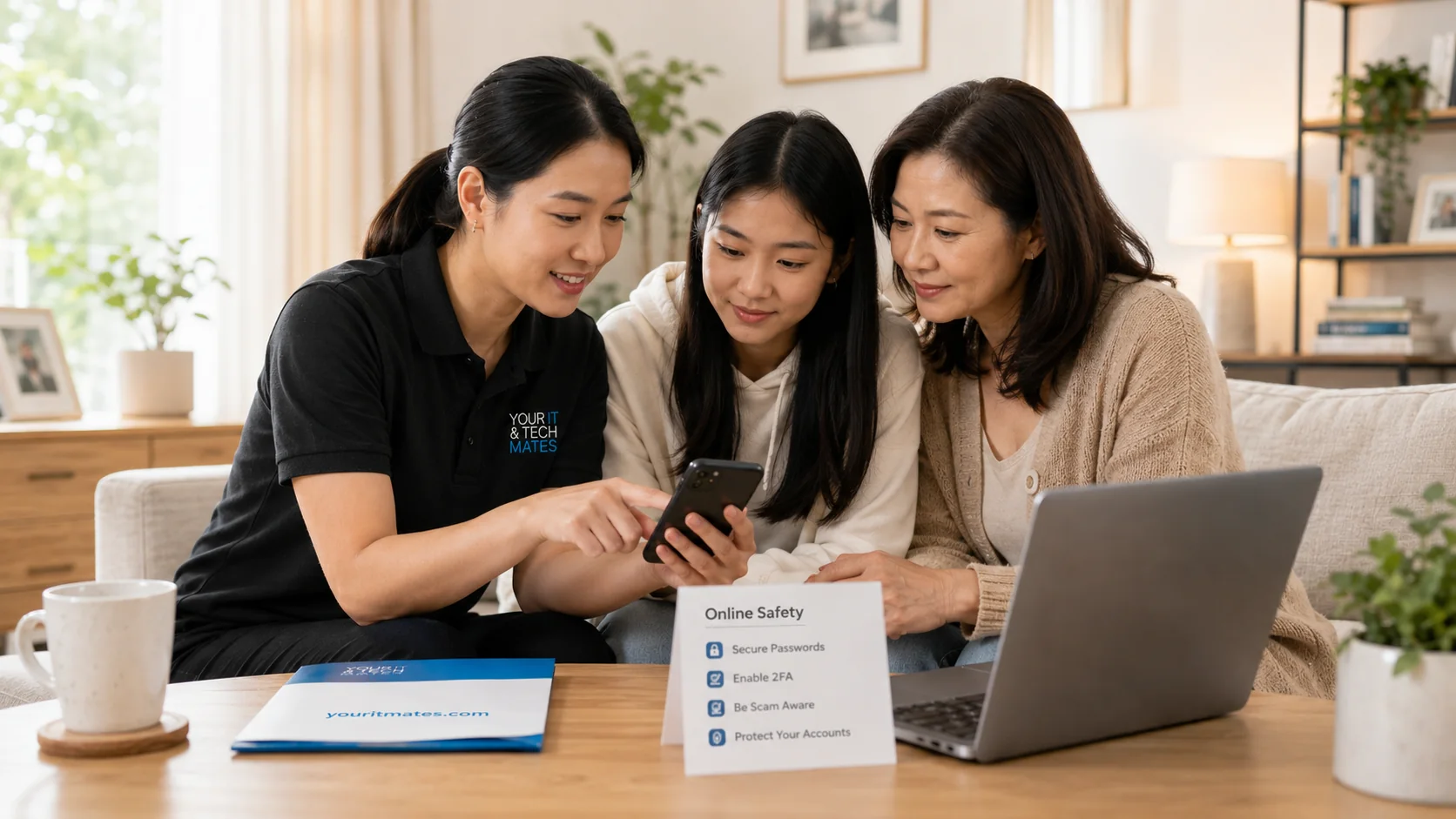
Every check is calm, clear and goes at your pace. We explain what we are doing and why at every step.
We look for AnyDesk, TeamViewer, QuickSupport, SupRemo and similar tools that give someone else access to your device. If we find one, we remove it and check what access was possible.
We check which important accounts (email, banking apps, Apple ID or Google Account) may be at risk and help you change passwords safely — one at a time, clearly explained.
Where possible, we turn on two-factor authentication for important accounts. This makes it much harder for someone else to log in even if they have your password.
We check for malware, suspicious software or browser extensions that should not be there, and remove anything found. We also check Windows Defender or your existing security software.
We check that account recovery options like backup phone numbers and backup email addresses are still yours — scammers sometimes change these to maintain access after a call.
We explain in plain English what to watch for next, how to identify a genuine company call versus a scam, and what the family should do if another suspicious call comes in.
We handle the device and account side. For financial, identity or legal concerns, these are the official bodies to contact.
Money has moved, card details were shared, banking login or one-time codes were given to the caller, or your bank account looks different. Ask the bank to review recent transactions and place a temporary hold if needed. Use the number on your card or the bank's official app — not a number from the suspicious call.
Your identity documents (licence, Medicare, passport) were shared, your identity may have been used to open accounts, or you have received notifications about accounts or credit applications you did not make. IDCARE is Australia's national identity and cyber support service — free and confidential. Visit idcare.org or call 1800 595 160.
Money was stolen, someone is pressuring or threatening you, or the situation feels physically unsafe. For financial crime, report to your local police and to the ACCC via Scamwatch (scamwatch.gov.au). A report helps protect other Australians from the same scam.
⚠️ We are a tech support service — not a legal, financial or identity-theft service. We are happy to help you understand what to do next and who to contact, but for financial losses, identity theft or legal concerns, please contact your bank, IDCARE or police as appropriate. Getting help quickly makes a real difference.
| Service | Typical cost | Typical time |
|---|---|---|
| Device and account scam check Remote access, passwords and security review | $150/hour including GST | 45 min – 1.5 hours |
| Full lockdown and setup Passwords, 2FA, malware removal and recovery review | $150/hour including GST | 1.5 – 2.5 hours |
| Follow-up or phone/tablet safety check | $150/hour including GST | About 1 hour |
Clear Approval. We explain costs clearly before starting. Family members are welcome to be present during the visit.
We help families across Epping, Wollert, Bundoora, South Morang and nearby suburbs after suspicious calls — calmly and practically.
"We were not sure if it was a scam or a real Telstra call. They came out quickly, checked everything and explained it clearly. We felt so much better afterwards."
Call or WhatsApp to talk through what happened. We can usually help you understand the risk level and organise a same-day visit if needed.
Use the dedicated Senior Scam Safety Review for a calm, technology-focused check with clear boundaries and family involvement by consent.
One connected service system
Your IT & Tech Mates uses TheFixers.APP to manage QuoteMe requests, tracked referrals, quotes and customer follow-up in one connected system.
Describe the problem in your own words. We will prepare a clear summary, provide an indicative range where suitable and confirm the next step.
Describe what happened or what you are worried aboutReferring someone who may need scam-safety help? Sign in to share a tracked referral.
Refer a customerReferral commissions are subject to eligibility, completed-job verification and the referral terms.