
Lost Money Next Step Helper
If money was sent, act quickly. This helper gives a simple first 10 minutes plan and evidence checklist.
Built for Australians who need a calm first check before clicking, paying, replying, sharing a code or installing anything.
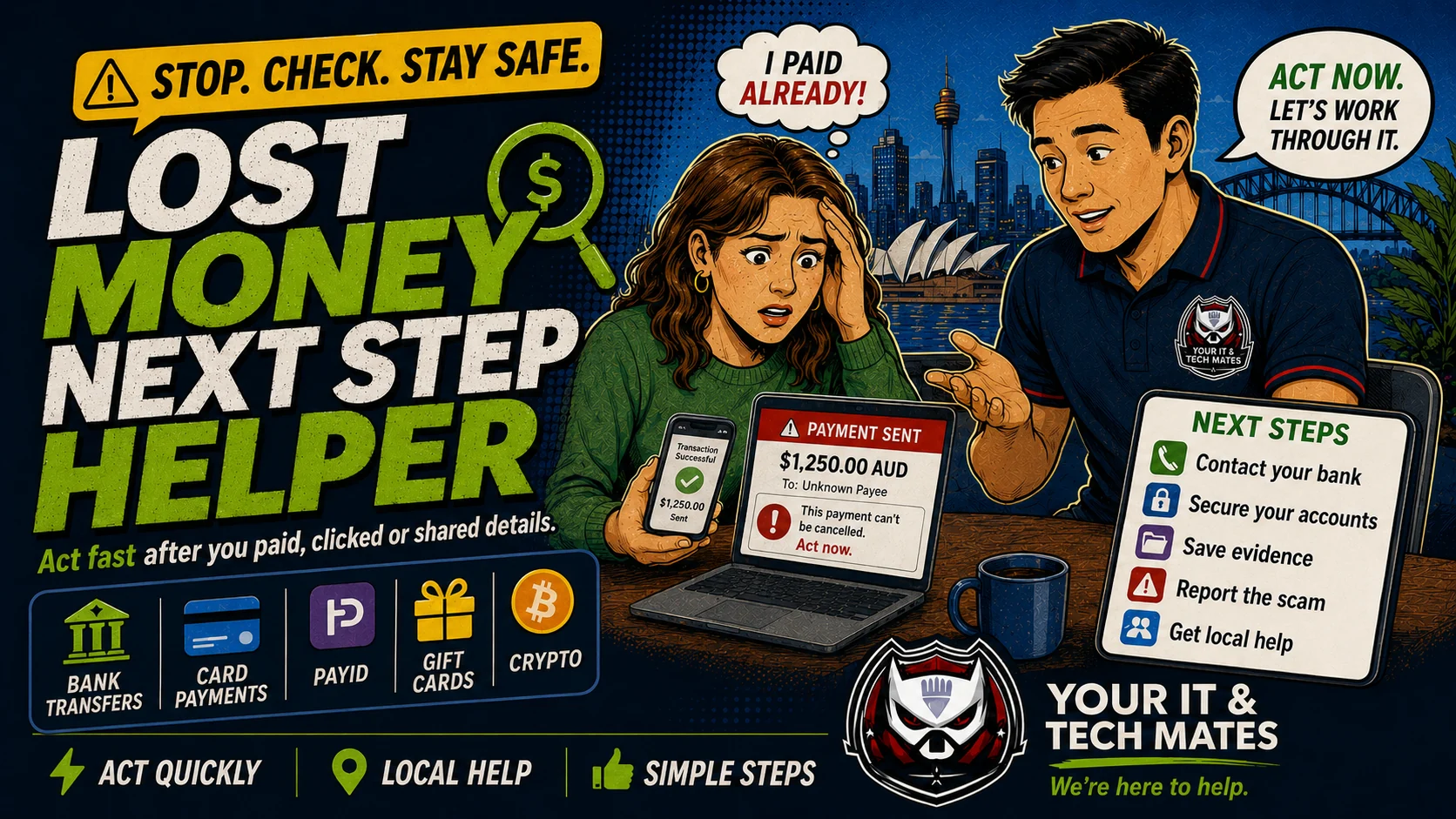
What happened? Choose the safest starting point.
Use this as a first-check triage system. Start with the situation, then move to the safest next step before paying for help.
Designed for the moment people feel rushed or unsure.
This tool now gives a clearer path for three real situations: checking before acting, helping someone else, or recovering after money/details were shared.
Do not send more money to recover the first payment, unlock a refund, pay tax, or prove your account is safe.
Bank first. Reporting is still important, but the fastest money-protection step is contacting your bank or card provider immediately.
Treat this as urgent. Call your bank or card provider now, then save evidence and secure affected accounts.
Tick what applies.
The result gives a simple risk level, what to avoid, and the safest next action.
Bank first, then evidence and reporting
When money has been sent, the first practical step is usually to contact the bank, card provider or payment provider as quickly as possible. Use the official app, card number or website you type yourself.
After that, collect evidence, secure affected accounts, and choose the right reporting path depending on whether it was a scam, cybercrime, identity exposure or device/account compromise.
- Call your bank or card provider immediately using the number in the official app or on your card.
- Ask about stopping, reversing, disputing or freezing the transaction where possible.
- Do not keep negotiating with the scammer or send more money to recover the first payment.
- Save screenshots, messages, phone numbers, URLs, receipts and transaction IDs.
- If identity details were shared, consider IDCARE. If accounts/devices are involved, use ReportCyber and recovery steps.
Use the right checker for what happened.
Want someone to check the device or accounts with you?
See the Scam Safety Help service for calm, hands-on device and account checks after a suspicious call, message, payment or remote-access incident.
Check before relying on this result
This free tool provides general guidance from the answers you choose. It may be incomplete or inaccurate and is not a confirmed diagnosis, safety clearance, professional assessment, fixed quote or guarantee of an outcome.
For safety, security, money, legal rights, health, data loss or destructive changes, verify the result with a current official source or an appropriate qualified person. To the extent permitted by law, we are not responsible for loss caused by relying on free, unconfirmed tool output instead of obtaining that help. Nothing here removes rights that cannot be excluded under Australian law.
Read the Information disclaimer · How tool information is handled