How We Measure Whether an Intent-Driven Website Actually Helps
Why time to a useful next step, clarification, correction, continuation and completion matter more than general page-view totals.
Helpful guidance only. You review before anything is sent or changed.
Quick answer
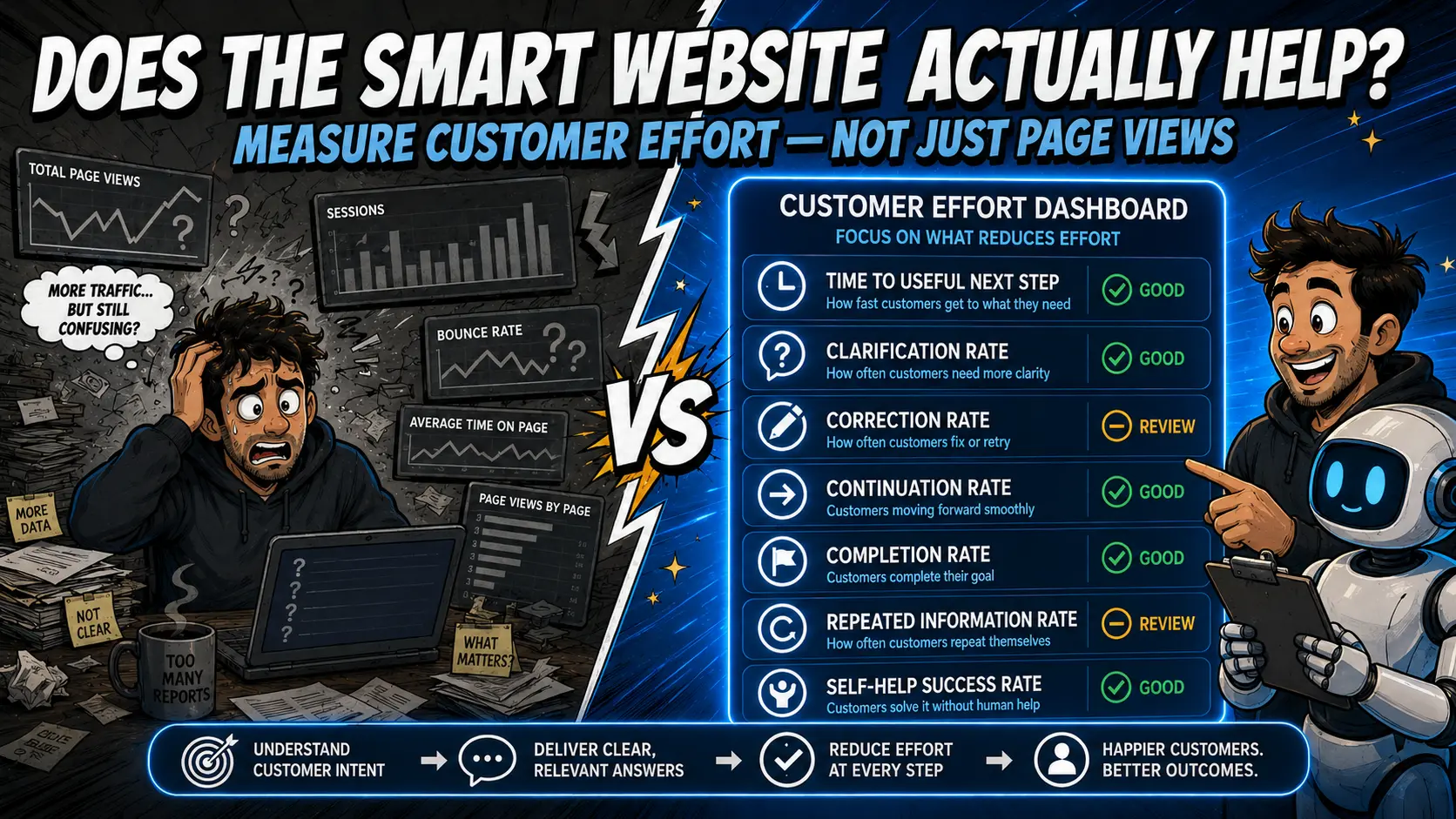
More visits do not prove a website is easier to use. The better evidence is whether customers reach a useful next step sooner, need less clarification, repeat less information, continue successfully and complete the task they chose.
Start with an outcome, not traffic
Page views can explain volume, but they cannot show whether someone understood the next step. A high-traffic page may still send people in circles. Customer-effort measures connect a specific opportunity with a useful or unsuccessful outcome.
The measures that matter
The system tracks time to a useful next step, clarification rate, “Not quite” corrections, tool-to-QuoteMe continuation, QuoteMe completion, repeated information, existing-customer continuation, safety-routing accuracy, duplicate requests and self-help success. Each measure has a visible numerator, denominator and preferred direction.
Suppress weak conclusions
Small samples can swing dramatically. Reports therefore show “not enough data” below a minimum volume and compare separate seven-day windows. That makes it harder to celebrate noise or punish a journey because of one unusual week.
Privacy and measurement can coexist
The browser sends fixed result codes and a time bucket rather than raw search wording, identity or a fingerprint. Duplicate-request and safety outcomes come from their existing authoritative workflows instead of being guessed from clicks.
Use measures to ask better questions
A rising clarification rate may mean the categories overlap. A high repeated-information rate may reveal a broken handoff. A low self-help success rate may show that a guide lacks a practical next step. Metrics guide investigation; they do not diagnose the cause by themselves.
The boundary that keeps this useful
The Intent Engine may organise language, rank reviewed options and prepare an editable summary. It does not make a final diagnosis, invent a price, approve paid work, book an appointment or submit a request without the customer’s action.
Frequently asked questions
Why are page views not enough?
They measure exposure, not whether the customer reached a useful outcome with less effort.
Why show numerators and denominators?
They make the evidence understandable and expose when a percentage is based on very little activity.
Can metrics change production automatically?
No. They support human-reviewed improvement decisions and normal release controls.
Continue the six-part Intent Engine education series
What Happens When an Intent Engine Is Not Sure?Part 2
Safety Before AI: Why High-Risk Requests Need a Safer PathPart 3
From Customer Words to an Approved Service CataloguePart 4
What Happens When a Customer Says “Not Quite”?Part 5
How We Measure Whether an Intent-Driven Website Actually HelpsPart 6
Agent-Ready Websites Without Autonomous Customer Decisions
Related established guides and proof
Could your business use Intent Intelligence?
We review the language customers already use, the approved business outcomes and the systems that own pricing, booking or fulfilment before recommending a build.