AI Website Analytics vs Traditional Website Analytics: What Businesses Can Learn Beyond Page Views
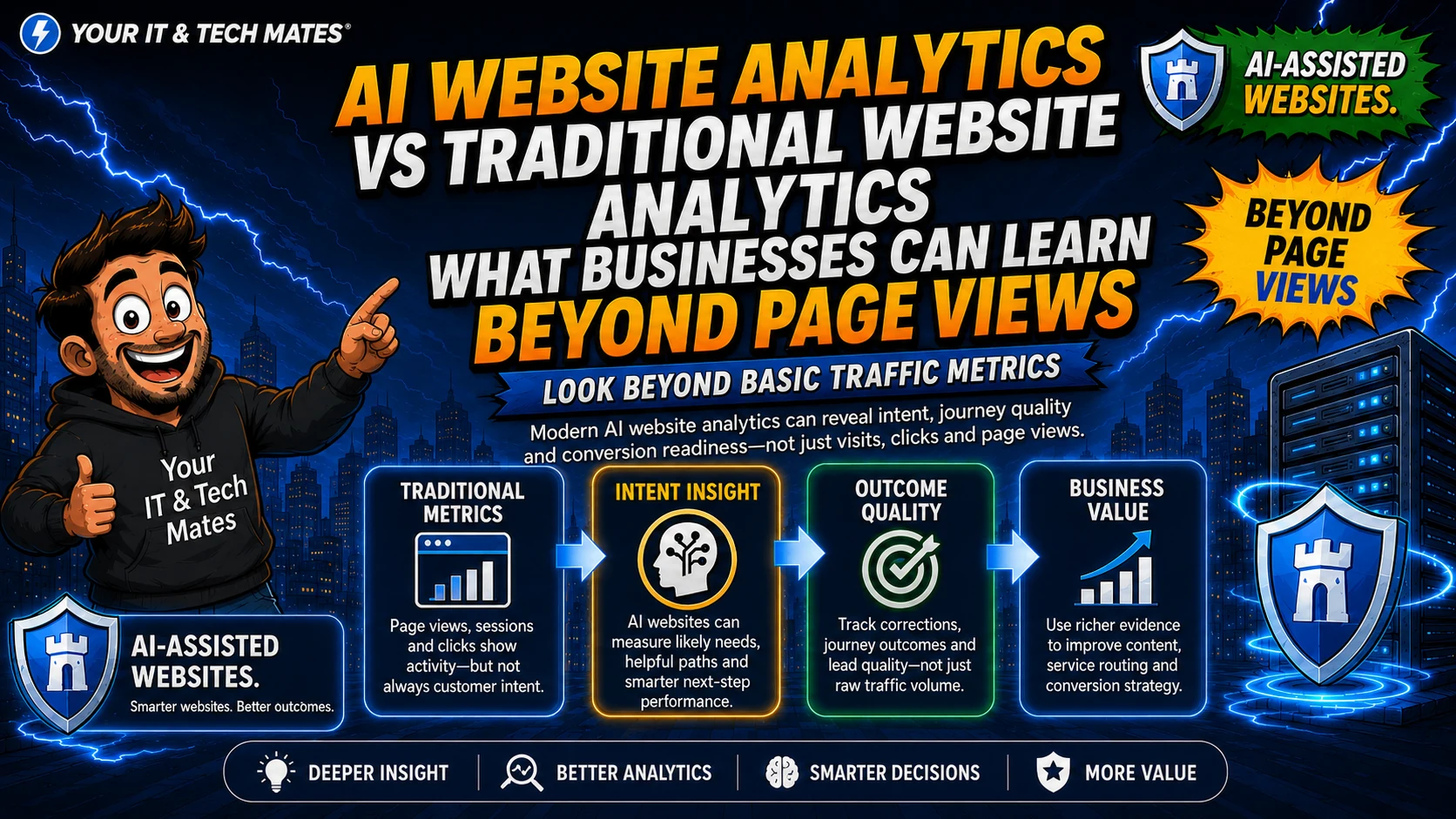
Traditional analytics show traffic. AI-assisted journey analytics can add intent, outcome quality, correction and next-step evidence so businesses understand what visitors are actually trying to achieve.
Quick answer
Traditional analytics answer questions such as how many people visited and which pages they opened. AI website analytics can add a second layer: likely customer needs, journey coherence, correction patterns, question usefulness, next-step outcomes and lead readiness without replacing the core traffic metrics.
What traditional analytics do well
Sessions, page views, referrers, devices and conversion events remain useful. They show reach, traffic sources and broad behaviour. AI website analytics should complement these measures rather than pretend they are obsolete.
What intent and journey analytics add
An intent-aware site can report which help areas visitors appear to be exploring, where uncertainty is high, which clarifications are useful and which page-to-page transitions are associated with successful outcomes.
Measure outcome quality, not only volume
A thousand visits can be less valuable than a hundred visitors who reach the correct service, complete useful tools or submit well-qualified enquiries. Outcome-quality measures connect website activity to customer usefulness.
Use corrections as a quality signal
Not quite feedback, misrouting and confidence calibration provide a view traditional analytics cannot offer: whether the website actually understood the visitor well enough.
Turn richer analytics into business decisions
The goal is not a larger dashboard. It is better decisions about content, navigation, service pathways, questions and CTAs. Start with a small number of measures tied directly to customer and business outcomes.
Practical example: page traffic versus journey meaning
Traditional analytics might report that a service page had 1,000 visits, a 62% engagement rate and 80 QuoteMe starts. Journey analytics asks a different question: what were people trying to solve, which next step were they offered, and did that next step match the eventual outcome? Two pages can have similar traffic while producing very different levels of useful customer progress.
For Your IT & Tech Mates, a useful measurement layer should connect anonymous intent categories, page context, recommended actions and confirmed outcomes without turning the website into a surveillance system. That makes it possible to learn that Wi-Fi customers often need an on-site path while cracked-screen customers are more likely to benefit from pickup, for example.
Where it can go wrong: Analytics should support decisions, not manufacture certainty. Small sample sizes, seasonal demand and incomplete outcomes can make a pattern look stronger than it is. Keep thresholds conservative and let staff review changes before customer-facing behaviour is altered.
Related AI-assisted website guides
Continue with the guides that explain the underlying customer-experience, intent and governance ideas in more detail.
Frequently asked questions
How is AI website analytics different from Google Analytics-style traffic analytics?
Traffic analytics focus on visits and behaviour. AI website analytics can add intent, uncertainty, correction, journey and next-step outcome measures.
Should businesses stop using traditional analytics?
No. Traffic analytics remain useful and are stronger when combined with customer-intent and outcome evidence.
What is the most useful new metric to start with?
Start with a measure tied to a real business problem, such as correct routing, customer effort or qualified request completion.
Can AI website analytics work without invasive tracking?
Yes. Many useful intent and journey measures can be derived from first-party, privacy-minimised events and aggregated outcomes.
Could your website make customer journeys easier?
Tell us where customers get stuck, repeat themselves, choose the wrong path or submit poorly matched enquiries. We can review whether clearer content, website logic, automation, custom software or bounded AI fits the problem.