
Stop
Do not wait until the last minute if the issue affects study, campus work, proof of experience or a device you need for class.
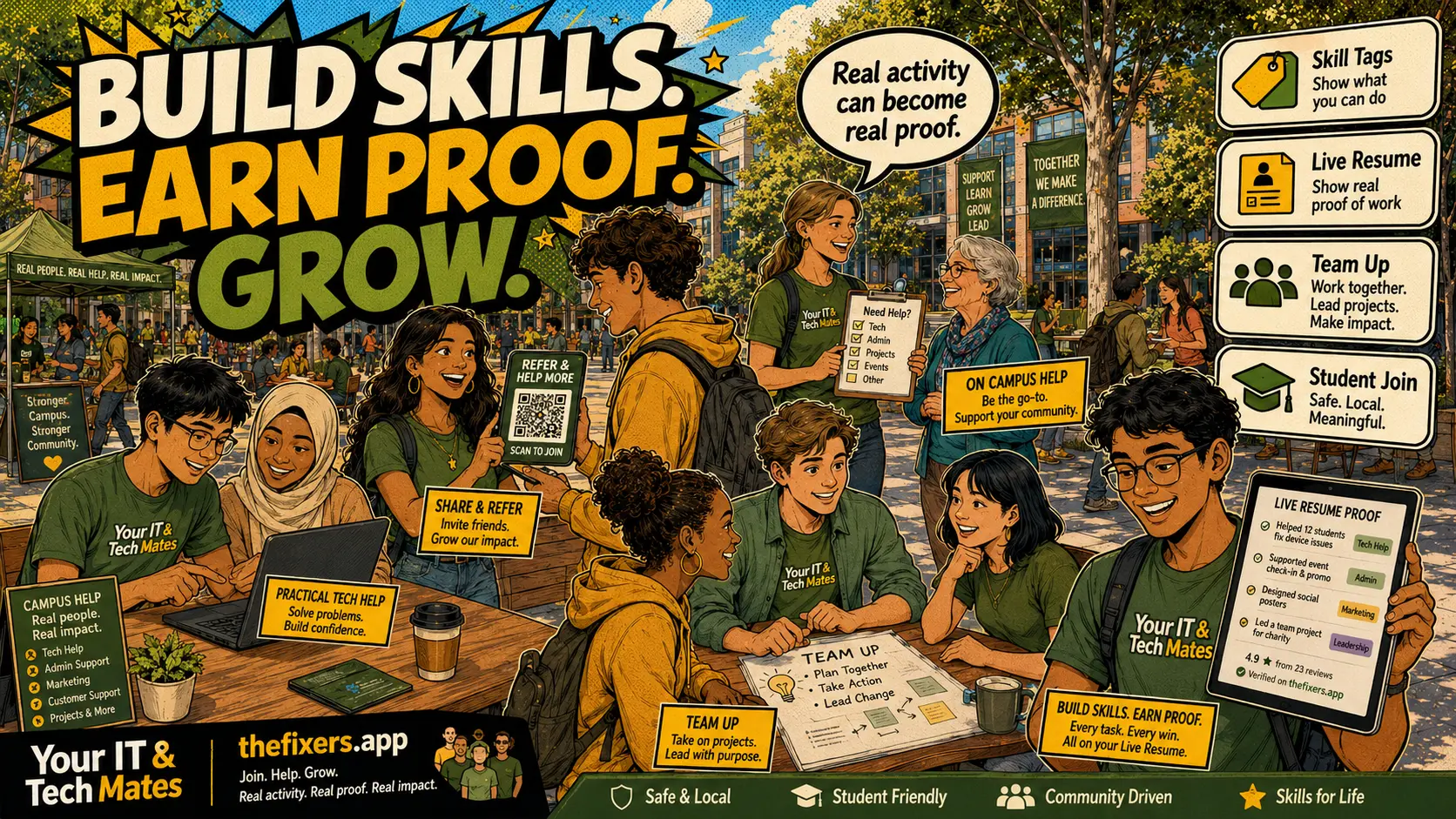
Student experience pathway
TheFixers.APP pathway is designed for students who need practical experience before they already have a long work history. A student can start with small, safe tasks, build confidence, collect reviewed proof, and turn that activity into a clearer Live Resume story.
This guide is organised for quick decisions, safer checks and clearer next steps.
A 12-week student service reputation challenge: from first referral to proof library and project team interest, week by week.
Use the guide to choose the right next step and avoid spending time or money in the wrong place.
Keep the model, symptom, photos, error messages and timing together before asking for help.
Use this guide first, then choose Quick Help or the most relevant local service page.
Do not wait until the last minute if the issue affects study, campus work, proof of experience or a device you need for class.
Read the practical steps, gather the details you already have and choose the pathway that best matches your situation.
Use the linked pathway or Quick Help if you need a real person to point you to the next step.
Choose the step that solves the real problem first, then avoid adding extra tools, bookings or work until the next action is clear.
A narrative challenge format: a week-by-week plan from first referral to proof library and project-team interest. Replaces a broad pathway story with a concrete semester-length action plan.
Week 1 choose a micro-service. Week 3 run a share campaign. Week 6 request proof. Week 9 join a team project. Week 12 publish a live resume summary.
Week 1: complete the setup checklist, choose your micro-service and write your first profile description. Week 2: run the 7-day referral launch plan for one chosen audience. Week 3: review results, update your profile based on what questions people actually asked.
Week 4: run your first 30-day campus share kit campaign — start with one permitted channel. Week 5: handle your first two or three enquiries using the five follow-up scripts. Week 6: request your first proof point after any completed work.
Week 7: build your first landing card for the next season — exam period, move-in week or upcoming club event. Week 8: shadow at least one provider or senior helper to observe how they handle a real job. Week 9: ask your campus ambassador or lead provider about team project opportunities.
Week 10: contribute to a supervised team project if available, or complete a second solo job with a full follow-up process. Week 11: add at least two more entries to your proof library, following the permission and review process for each.
Week 12: prepare your live resume update with STAR stories from your best proof points. Write one LinkedIn post or campus update summarising your semester activity honestly.
Review your weekly logs from all 12 weeks. Which micro-service generated the most genuine enquiries? Which channel worked best? Use these insights to set up next semester's plan in advance.
Take the 12-week student reputation challenge. Start with week 1 today — complete the setup checklist and choose your micro-service.
Start with one referral. Build proof. Grow your future.
Keep building proof