From Website Search to Qualified Lead: How to Reduce Customer Friction
A customer should not have to search, choose a category, complete a long form and then explain the same problem again. A better website carries useful context forward and asks for only what the next step actually needs.

Quick answer
To reduce website lead friction, connect the customer’s first description to the rest of the journey. Understand the likely intent, show the most relevant approved information, ask only for missing details that change the route and carry the customer-reviewed summary into the real enquiry or quote workflow.
Why this matters to another small business
This article uses a real Your IT and Tech Mates website pattern as the example, but the lesson is broader. Customers usually describe a problem before they know the service name. A useful AI or automation layer should help translate that plain-English intent into an approved business workflow without forcing the customer to learn your internal categories.
For implementation options, see our Small Business Software & AI Solutions Melbourne hub. It explains how we approach workflow review, custom software and practical AI integration before recommending a build.
Where friction usually appears
Most friction is created by handoffs: search to service page, service page to form, form to staff inbox, inbox to quote. If the customer has to repeat the same facts at every handoff, the website is organised around systems rather than the customer journey.
Use search intent as reusable context
When a customer writes “MacBook Air screen cracked”, the useful facts are already present. The next page should not immediately ask “what device do you have?” and “what is wrong with it?” again.
A short, controlled summary can follow the public journey until the customer reaches the existing request owner.
Qualification is not the same as interrogation
A qualified lead is not a lead with every possible field completed. It is a lead with enough trustworthy information for the next business decision. Sometimes that is device, symptom and location. For a software project it may be the business problem, current workflow and desired outcome.
Show useful information before asking for contact details
Where appropriate, show the likely service, indicative price guidance or what could change the estimate before forcing the customer into a contact form. That helps the person decide whether the service is worth continuing with and can reduce low-fit enquiries.
Keep the real request explicit
Understanding intent should not silently create a customer record or job. In our own flow, QuoteMe remains the explicit request path. The intent layer can prepare context, but the customer reviews and submits the request.
Measure the whole journey
Search relevance is only one metric. Also measure clarification rate, corrections, form starts, completed requests, duplicate enquiries and staff rework. A route that looks accurate but produces more abandoned forms is not necessarily a better customer journey.
A practical next step
Start with one customer journey and write down three things: what customers actually say, what the business needs to know next, and which existing system owns the final action. That makes it much easier to decide whether better copy, a shorter form, predefined rules, workflow automation or AI is the right tool.
Frequently asked questions
What is website lead friction?
It is unnecessary effort between the customer’s need and the next useful action, such as repeated questions, unclear categories or disconnected forms.
Does a shorter form always convert better?
Not always. The goal is the minimum useful information for the next decision, not simply the fewest fields possible.
Can intent data prefill a lead form?
It can carry a customer-reviewed summary or controlled fields where appropriate, while the customer still confirms and submits the request.
Should price guidance appear before a form?
When reliable indicative pricing exists, showing it early can help customers decide whether to continue. It should still be clearly labelled as guidance rather than a fixed quote.
How do I know where customers drop out?
Track the major handoffs from search to page, page to form and form to completed request, then compare abandonment and correction patterns.
Could your business use Intent Intelligence?
If customers already describe what they need through your website, forms, email or messages, those conversations may contain enough information to identify intent, capture useful context and start the right controlled workflow.
Intent Intelligence is custom software built around your workflow, not another generic chatbot.
Related reading
View all AI-assisted website guides →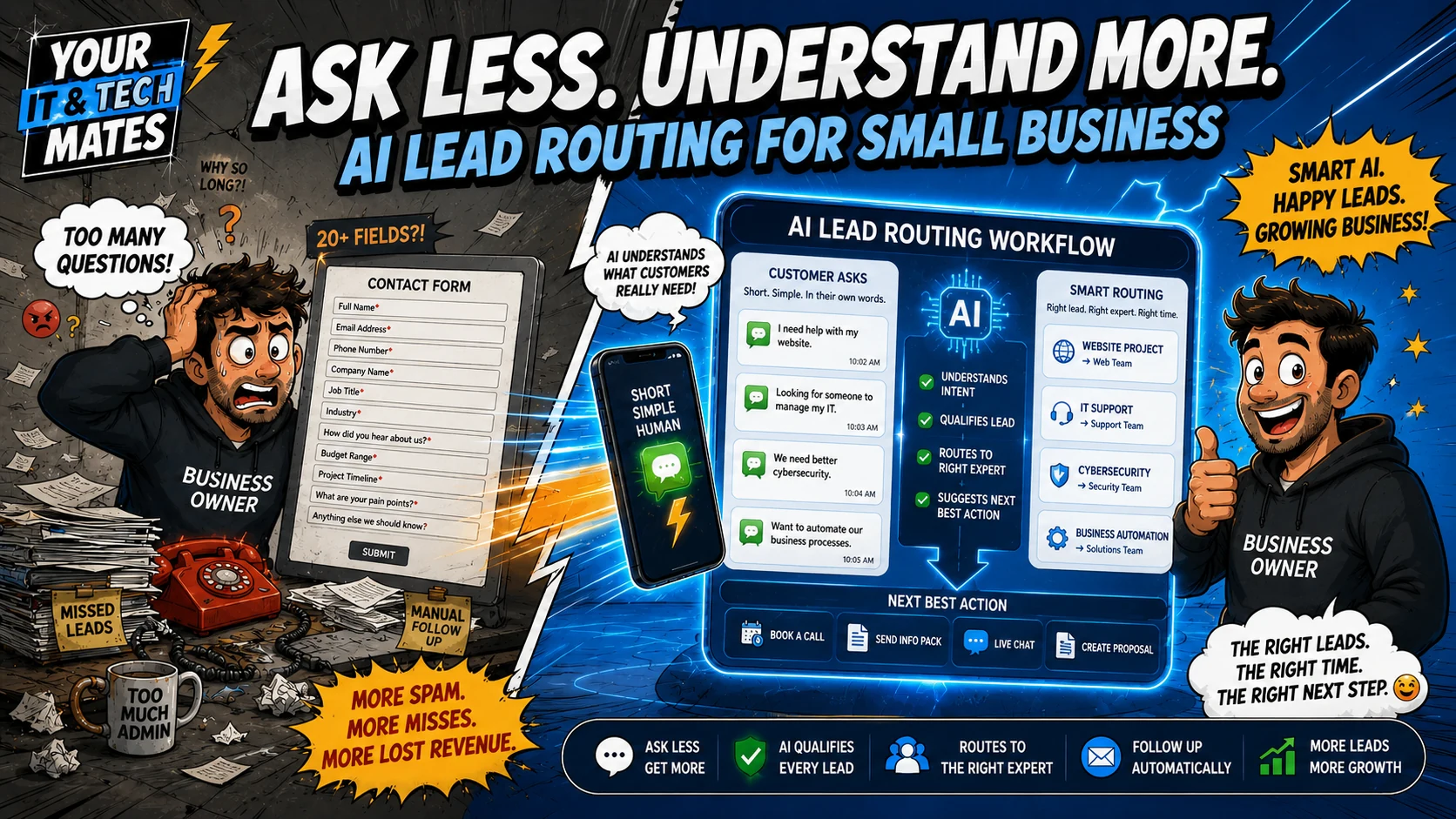

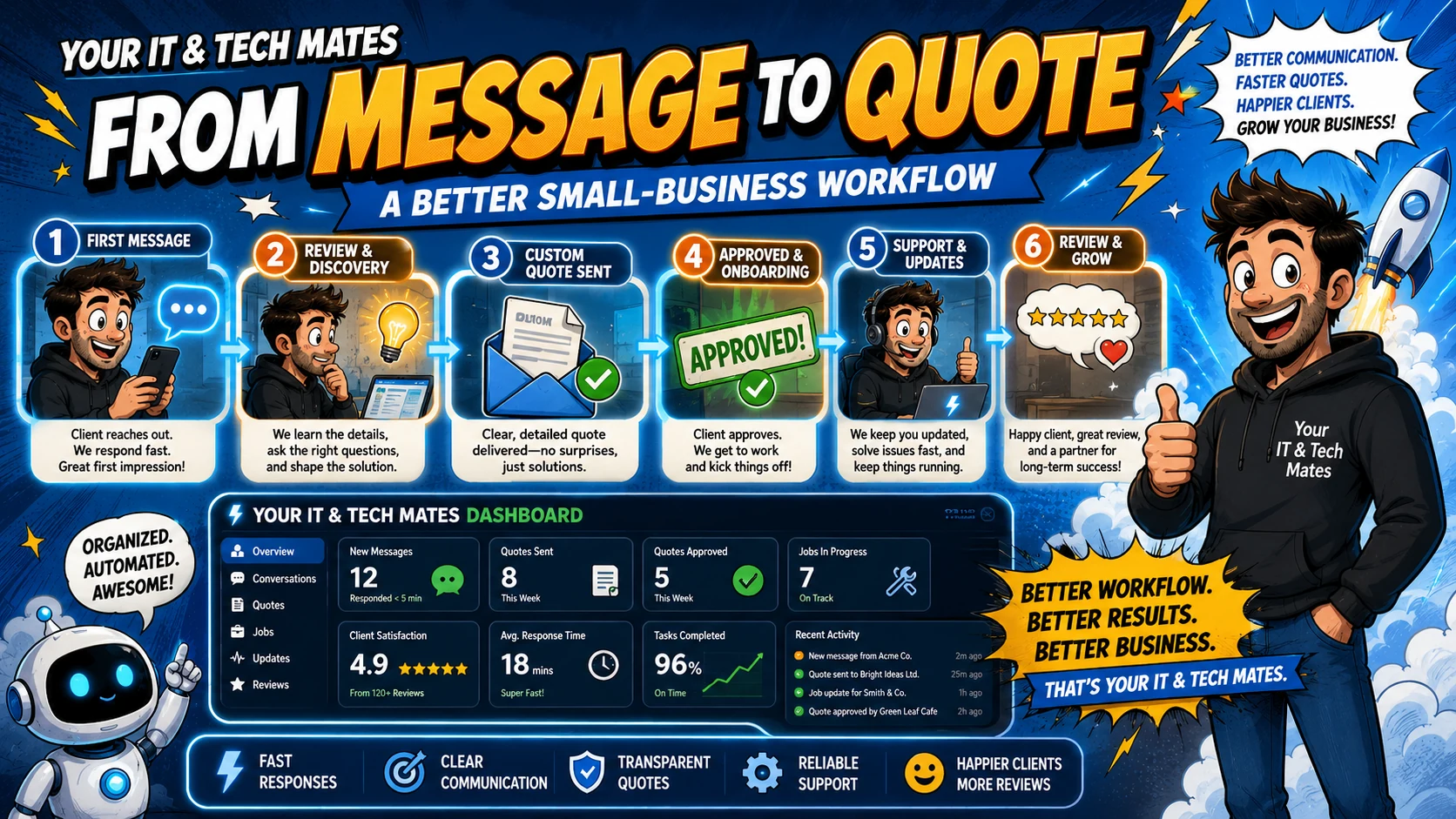
Want a smoother enquiry journey without rebuilding everything?
Our Software & AI service can review the handoffs between website, forms, QuoteMe, CRM and staff workflows before recommending automation.
New: Intent-Aware Website business series
These newer guides show how content semantics, customer corrections, journey context and readiness signals can work together without turning ordinary browsing into certainty.