How We Connect Website Enquiries, QuoteMe and Staff Follow-Up
A YITM workflow example showing how website visitors, editable quote requests and staff follow-up can work together for Melbourne small businesses.
Quick answer
The quickest way to frustrate a customer is to make them explain the same problem across your website, contact form and phone call. Connecting those steps is often more valuable than adding another clever chatbot.
Evidence note: YITM build experience and labelled tests are distinguished from unverified live-customer savings or conversion outcomes.
The customer problem behind this workflow
A busy technician may be in the middle of a repair when a new enquiry lands. The message could arrive by website form, missed call or conversation. Without one visible next step, staff may respond late or ask for information already supplied.
A connected workflow must also avoid duplicates: the same visitor could refresh the page, resend a form or click twice on a patchy connection.
How we designed the YITM workflow
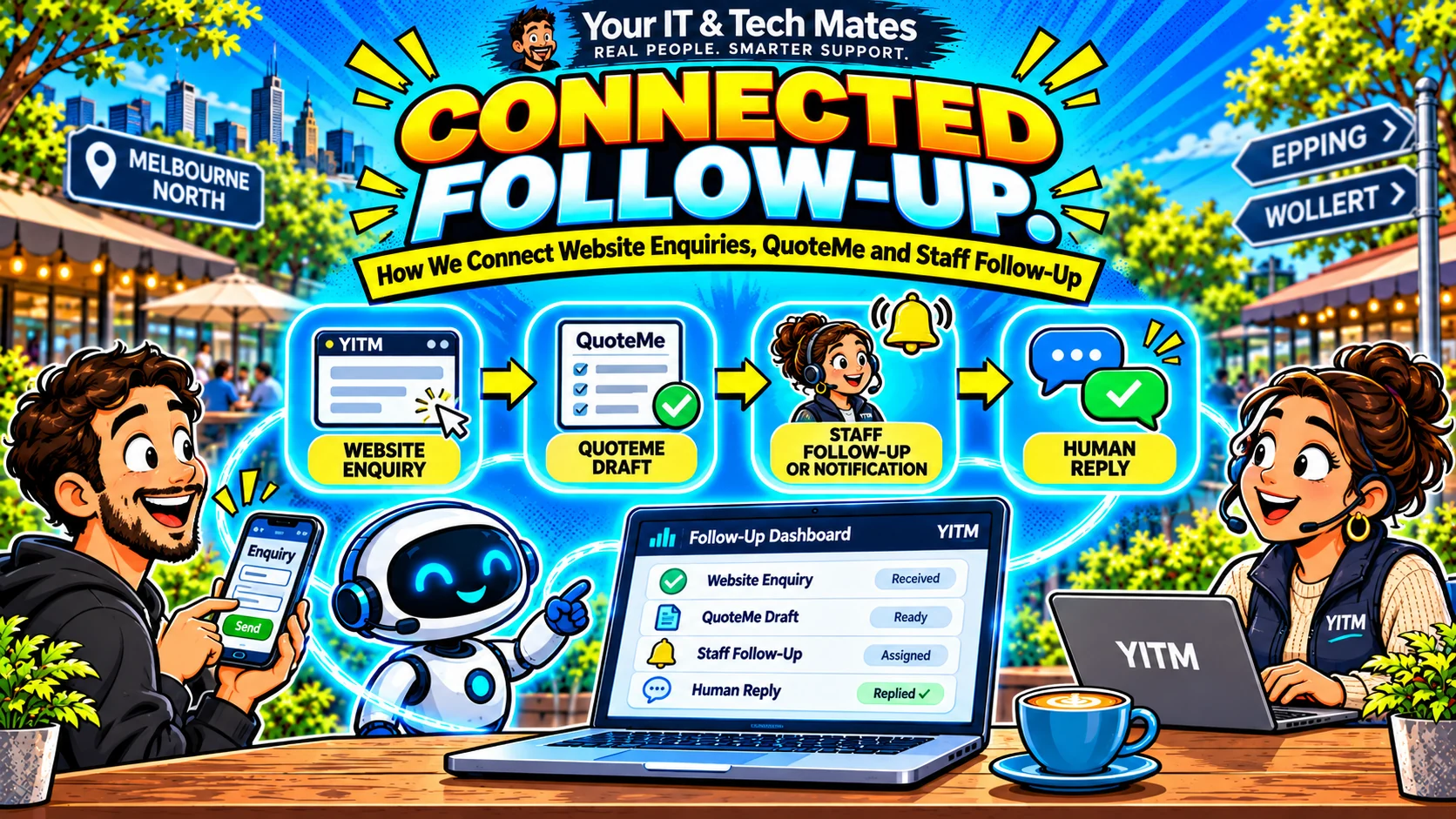
Our design starts with a website entry point and approved information. A customer seeking help can move to QuoteMe with a prepared description and then choose whether to submit. Staff see the request in a shared conversation context and decide what to ask or do next.
We built guarded receipt handling and replay checks because a duplicate submission is not a better conversion. Notifications and follow-up are operational assists, not substitutes for a technician's reply. The customer should understand which action has been completed.
What we built, tested and learned
YITM’s recovery testing includes saved drafts, same-case handover summaries and repeated receipt checks. Existing articles cover the customer conversation workflow and missed-call follow-up as separate problems; this article explains how those pieces need to cooperate.
We still distinguish the intended end-to-end design from measured live customer response times. The important acceptance step is watching a real authorised staff member receive and handle a test enquiry without duplication.
What this could improve for YITM and other businesses
For YITM, the intended outcome is less administrative switching and a faster meaningful first reply. We would measure time to first human response, drafts turned into submitted enquiries and whether a second message was necessary.
Another small business can start with one enquiry source, one owner and one response target. Connect the next system only after the team can see when a customer is waiting.
Local business perspective: Epping, Wollert and Melbourne North
Our own service work in Melbourne’s northern suburbs provides a practical test bed: customers want a clear next step, especially when they cannot describe a technical problem. This article is a first-party YITM workflow example, not a claim that an identical automation suits every local business. A café, clinic or trade service should map its own permissions, customer journey and response expectations before copying the pattern.
A missed-call versus web-form example
Imagine a technician is replacing a laptop screen when a new message arrives. An automatic acknowledgement may help, but the team still needs a clear queue item showing who must reply and which details are already known.
If the customer then opens QuoteMe, the system should not create two unrelated jobs silently. Staff need a way to see the enquiry history, avoid duplicate work and respond in the right channel.
Measures to watch each week
Track elapsed minutes from enquiry arrival to a useful staff response, split by website and missed-call source. Measure how often people abandon a draft before sending and how often staff must ask for the same information again.
A notification delivery count is not a business result. For YITM, the practical goal is that customers know their next step and staff know which enquiries need attention.
Frequently asked questions
Does an automated acknowledgement count as the first reply?
It can reassure the customer, but operational reporting should distinguish an automatic acknowledgement from a useful staff response.
How do you stop repeated submissions?
Use server-side idempotency and receipt checks; do not rely only on disabling the button in the browser.
Keep exploring YITM's workflow automation work
Start with our virtual receptionist overview, then follow the engineering details below.
- quoteme customer conversation workflow automation
- quoteme missed call sms enquiry automation melbourne
- How our website works as a virtual front desk
- Our wider small-business workflow lessons
Behind the Build · all ten articles
- Part 1 — How We Built an AI Receptionist That Asks Better Questions
- Part 2 — Why Our AI Receptionist Needs to Remember the Conversation
- Part 3 — AI or Rules? How We Keep Our Virtual Receptionist Practical and Affordable
- Part 4 — From AI Conversation to QuoteMe: A Safer Customer Handover
- Part 5 — When AI Gets It Wrong: How We Test and Improve Our Receptionist
- Part 6 — One Customer, Two Problems: Designing AI for Multiple Service Requests
- Part 7 — Why Our AI Receptionist Cannot Book Work or Approve Prices on Its Own
- Part 8 — How We Connect Website Enquiries, QuoteMe and Staff Follow-Up
- Part 9 — How We Measure Whether an AI Receptionist Is Actually Helpful
- Part 10 — Start With One AI Workflow: What Our Small Business Learned
Could your business use a clearer customer workflow?
Tell us which enquiry, follow-up or handover consumes time for your team. We can discuss a small, human-reviewed workflow that fits your current tools. Please do not send passwords, API keys or private customer records. We confirm scope and pricing before any paid work.