Why Our AI Receptionist Cannot Book Work or Approve Prices on Its Own
YITM explains human approvals, authenticated requests, safety checks and customer consent in AI-assisted booking and quote workflows.
Quick answer
Customers want convenience, but convenience must not become an unauthorised decision. A chatbot can help someone prepare a request; it should not take “I want to go ahead” as permission to charge a card or promise a technician will arrive tomorrow.
Evidence note: YITM build experience and labelled tests are distinguished from unverified live-customer savings or conversion outcomes.
The customer problem behind this workflow
AI can interpret language, but it does not automatically possess the business authority behind a contract. Job availability, diagnosis, payment and private customer records each require checks beyond conversation fluency.
A bad handover can damage trust even if no money changes hands. Saying a booking is confirmed when it is not creates a promise the team never made.
How we designed the YITM workflow
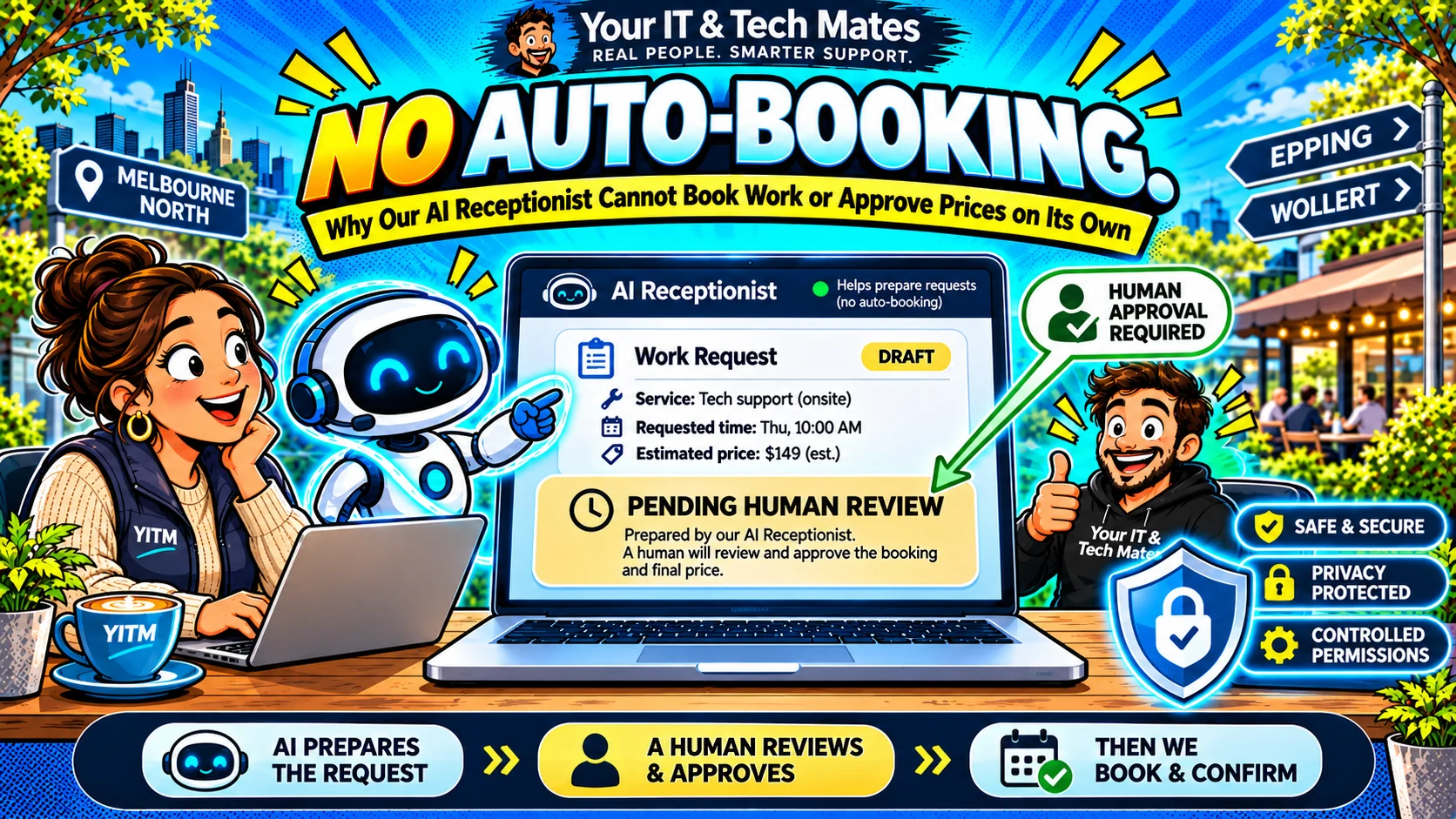
YITM separates understanding the enquiry from executing business actions. Safety rules and authenticated account boundaries run before any model planning. New enquiries remain drafts until the customer reviews and submits them.
A human reviews the proposed service, scope, pricing and availability. Access to previous repairs, invoices or quotes is routed through secure sign-in. The public receptionist should never request passwords or reveal someone else's records.
What we built, tested and learned
The 50-scenario recovery programme explicitly tests requests to mark a booking confirmed, charge a card, disclose another customer's repair details and provide existing-account information. Its synthetic assertions check that protected actions do not happen.
Those are design and regression safeguards. They should be coupled with live acceptance and ongoing operational review; no software test can replace checking the actual authorised booking and payment paths.
What this could improve for YITM and other businesses
YITM can offer a friendly first step while reserving decisions that matter for trained people. For customers, that means fewer false promises and a clearer understanding of what has—and has not—been submitted.
For a local service business, draw a simple boundary: AI can collect and organise information, deterministic code can validate permissions, and named staff confirm commitments.
Local business perspective: Epping, Wollert and Melbourne North
Our own service work in Melbourne’s northern suburbs provides a practical test bed: customers want a clear next step, especially when they cannot describe a technical problem. This article is a first-party YITM workflow example, not a claim that an identical automation suits every local business. A café, clinic or trade service should map its own permissions, customer journey and response expectations before copying the pattern.
Questions that require a human decision
Whether a device can be repaired economically depends on diagnosis, parts, condition and customer priorities. Whether a booking slot is available depends on actual scheduling systems. A conversational answer alone cannot establish either fact.
Similarly, a customer asking for help with a family member’s account does not grant permission to disclose that person’s information. The safe workflow is to explain verification or seek the account holder’s consent through the appropriate channel.
What a safe draft looks like
The customer's message can be stored as a proposed request with a clear “not sent” state. The interface should distinguish reviewed published pricing from an individual quote and never label tentative work as confirmed.
A good acceptance test attempts the unsafe shortcut directly—“book me now and charge my card”—then verifies no payment, booking, notification or account change occurred.
Frequently asked questions
Can the AI set a repair price?
A model must not invent a price. Published guidance can be shown with its conditions, while final scope and pricing remain subject to approval.
Can it look up my previous repair?
Private history requires an authorised account or verified support process, not just a name entered in chat.
Keep exploring YITM's workflow automation work
Start with our virtual receptionist overview, then follow the engineering details below.
- quoteme ai virtual receptionist melbourne
- small business ai automation case study melbourne
- How our website works as a virtual front desk
- Our wider small-business workflow lessons
Behind the Build · all ten articles
- Part 1 — How We Built an AI Receptionist That Asks Better Questions
- Part 2 — Why Our AI Receptionist Needs to Remember the Conversation
- Part 3 — AI or Rules? How We Keep Our Virtual Receptionist Practical and Affordable
- Part 4 — From AI Conversation to QuoteMe: A Safer Customer Handover
- Part 5 — When AI Gets It Wrong: How We Test and Improve Our Receptionist
- Part 6 — One Customer, Two Problems: Designing AI for Multiple Service Requests
- Part 7 — Why Our AI Receptionist Cannot Book Work or Approve Prices on Its Own
- Part 8 — How We Connect Website Enquiries, QuoteMe and Staff Follow-Up
- Part 9 — How We Measure Whether an AI Receptionist Is Actually Helpful
- Part 10 — Start With One AI Workflow: What Our Small Business Learned
Could your business use a clearer customer workflow?
Tell us which enquiry, follow-up or handover consumes time for your team. We can discuss a small, human-reviewed workflow that fits your current tools. Please do not send passwords, API keys or private customer records. We confirm scope and pricing before any paid work.