
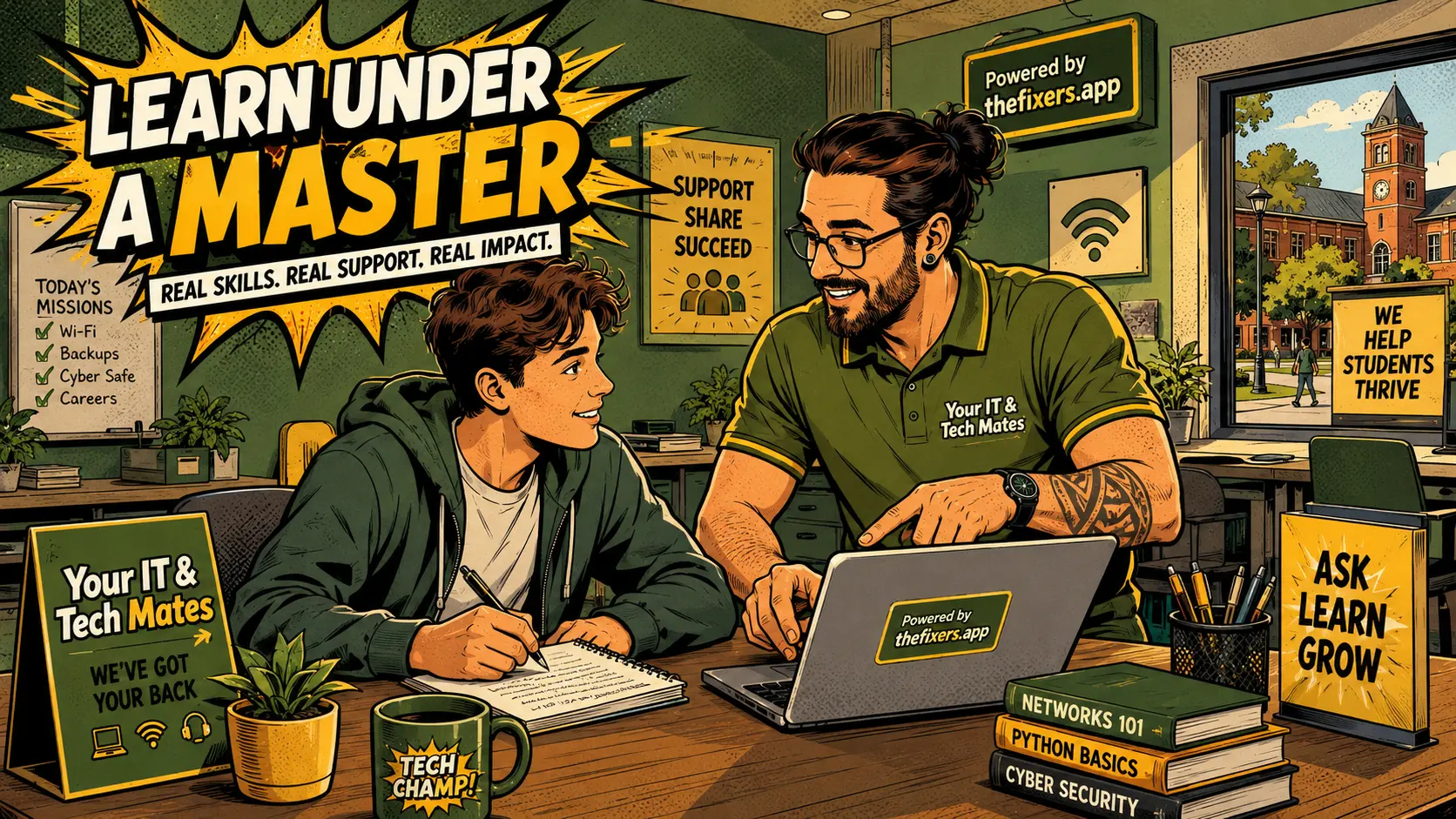
If you are a student, here is the real point
Soft skills are easier to prove when you have a real example. Campus missions help you show communication, teamwork, organisation and customer care in action.
This helps your future
This helps your future because many entry-level roles look for people who can explain things clearly, stay organised and work with others. These are skills you can prove before your first paid job.
Example resume line
[Volunteer] Helped a student understand a task step by step and practised clear explanation, active listening and follow-up.
Small next step
Pick one soft skill you want to prove, then choose a mission that lets you practise it.
Keep Volunteer proof clearly tagged as Volunteer. Keep paid proof separate. Share only privacy-safe examples.
Real student example: how this could help your future
A student asked for help explaining a tech problem to support staff. You helped them write a short, clear message with the issue, what they tried and what they needed next.
Career skill you can prove
[Volunteer] Helped a peer write a clear support message and practised communication, problem explanation, follow-up and customer-care thinking.
How to explain it later
“One soft skill I can prove is communication. I helped a peer explain a problem clearly instead of just saying ‘it does not work’.”
Where this fits
These soft skills are useful for retail, admin, IT support, hospitality, student leadership and local business roles around Melbourne North.
Student action for this week
Choose one soft skill and complete a mission that proves it in a real situation.
Share line: I’m not only learning tech. I’m building communication, planning and follow-up proof.
Soft skills need examples, not just claims
Most resumes say communication, teamwork and problem solving. The stronger resume explains when the student used those skills.
Campus Helper missions give students small stories they can use in resumes and interviews.
Communication
A student proves communication when they explain a tech or study problem in simple words, ask good questions, and confirm the next step clearly.
Example proof: Explained Microsoft 365 setup steps to a peer and followed up with a short checklist.
Planning and organisation
A student proves planning when they break a messy problem into steps, set a simple timeline or help a group track tasks.
Example proof: Helped a student club create an event checklist and deadline tracker.
Teamwork and customer care
A student proves teamwork when they support another person without taking over. They prove customer care when they are patient, respectful and clear.
Example proof: Helped a peer understand printing options and wrote a clear follow-up message.
Career benefit
These examples help students apply for customer service, admin, operations, IT support, project assistant and student leadership roles.
Sample resume proof lines
Peer support
[Volunteer] Helped a fellow student with a small campus task and practised clear communication, planning and follow-up.
Workplace proof
Built evidence of organisation, customer care, teamwork and privacy-safe support through a small guided mission.
Job family
Connected the mission to a future role such as tech support assistant, digital admin assistant, customer support or junior project coordinator.
Helpful internal links for students
Explore the full campus helper proof branch
Use these related guides as the hub-and-spoke pathway. Each page answers one student question and links back to the main branch.
How Students Can Build Real Resume Proof by Helping Other Students on Campus
A plain-English hub for students who want experience before their first job: volunteer-tagged campus missions, soft skills, job-family proof and a safe path toward paid review.
Volunteer Proof vs Paid Work: What Students Should Show Clearly
How students can use Volunteer-tagged proof honestly while keeping paid work separate.
What Is a Campus Mission Board and How Can It Help Students Get Experience?
A campus mission board gives students small, safe missions they can complete to build practical proof.
Study Skills Missions That Can Become Resume Proof
Study planning, task boards and assignment organisation can become useful employability proof for students.
Beginner Tech Support Missions Students Can Use for Resume Proof
Simple campus tech help can build proof in troubleshooting, communication and privacy-safe support.
Business Communication Missions Students Can Use as Career Proof
Follow-up messages, support notes and clear explanations help students prove business communication skills.
Management and Organisation Skills Students Can Build Through Campus Help
Campus missions can help students prove planning, task breakdown, deadline tracking and group coordination.
How a Student Resume Showcase Card Can Help You Share Proof Safely
A resume showcase card lets students share Volunteer-tagged proof, skill tracks and career examples without exposing private details.
How Peer Thank-You Notes Can Support Student Resume Proof
Peer thank-you notes can help students show communication, patience and reliability when privacy is handled properly.
From Volunteer Campus Help to Paid Review: A Safer Path for Students
Volunteer proof can help students prepare for paid work, but paid pathways should still be review-first.
How Campus Ambassador Sharing Helps Students Build Career Proof
Campus ambassador sharing can help students grow the helper loop while building marketing, communication and community proof.
Common student questions
What soft skills should students prove first?
Start with communication, organisation, planning, teamwork, customer care and follow-up.
Do soft skills matter for tech work?
Yes. Many entry-level tech roles need patient explanation and good notes as much as technical knowledge.
How do I show soft skills without overclaiming?
Use a small real example and write what you did in plain English.