How Intent-Driven IT Support Can Reduce Technology Friction in Childcare Services
Childcare leaders often do not need more software jargon. They need shared devices, photo workflows, sign-ins and staff support to feel simpler. An intent-driven support journey can reduce friction by starting with the everyday problem.
Quick answer
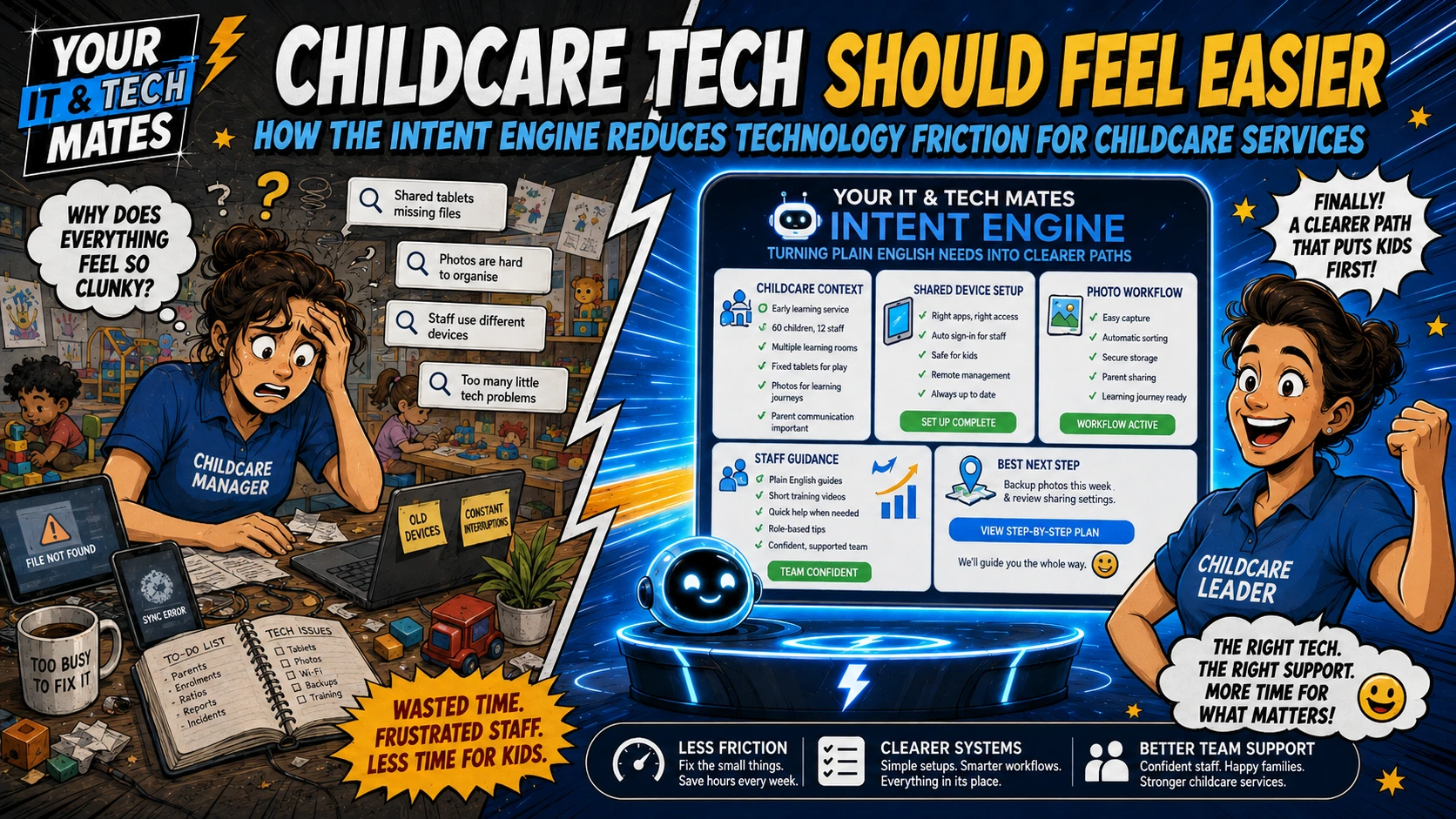
Childcare technology friction usually shows up as many small interruptions: missing files, shared tablets, awkward sign-ins, staff using different devices and photo workflows that feel clunky. An intent-driven support journey helps the service explain those problems in plain English and then move toward clearer, human-reviewed next steps.
Why childcare services experience technology friction
In a childcare setting, technology problems are rarely described as formal IT tickets. They sound more like, “Photos are hard to organise”, “Different staff use different tablets”, “We can’t find the files” or “Everything feels clunky”.
These are workflow problems, device problems and support problems all mixed together. A service leader should not have to stop and translate that into internal categories before getting help.
What a childcare manager is really trying to do
Most childcare leaders are trying to protect staff time, keep routines calm and make sure technology supports children, families and learning documentation rather than getting in the way.
That means the right support journey should recognise the service context. Shared devices, parent communication, learning stories and safe staff access matter in a childcare environment.
A plain-English childcare example
A service might say: “Staff use different tablets, the photos are hard to organise and we keep losing time on little device problems.”
A useful intent engine can recognise that this may involve shared device setup, a photo workflow problem and staff guidance needs. Instead of showing a long service menu, it can bring forward more relevant next steps like reviewing shared access, standardising device setup, improving storage and clarifying the photo process.
How the Intent Engine reduces friction
- It starts with the real daily problem. Staff do not need technical wording.
- It keeps the childcare context. Shared tablets, family communication and child-safe settings matter.
- It groups related issues together. One messy sentence can still lead to a clearer support path.
- It supports the team, not just the devices. Guidance, setup and workflow can be part of the answer.
- It still keeps human control. Advice, scope and paid work remain reviewed and approved.
For the wider content and SEO implications, our guide on customer language and SEO shows why real wording matters beyond support alone.
Why plain English improves SEO, GEO and usability
The same everyday wording that childcare leaders use can become strong website content. Search engines and AI answer engines are increasingly looking for pages that clearly answer real questions.
That means phrases like “shared tablets missing files”, “photos are hard to organise” and “too many little tech problems” are not weak wording. They are the starting point for better matching, stronger helpfulness signals and more natural answers.
What the website should not do
- It should not pretend every childcare issue has a one-click answer.
- It should not make automatic decisions about pricing, projects or paid work.
- It should not replace the service’s own operational judgement.
- It should not collect more data than is needed for the next step.
A good intent layer reduces effort. It does not remove responsibility.
A practical next step for childcare leaders
Start by collecting the plain-English issues staff already repeat. Then look for patterns. Which problems are really about devices? Which are about workflow? Which are about training or consistency? That is where an intent-driven website can become useful.
Related examples are available for schools, retirement villages and the broader guide on starting with the problem, not the menu.
Start with the full organisation Intent Engine guide
For the complete overview of how organisation context, plain-English intent and human-controlled next steps work together, read How an Intent-Driven Website Helps Schools and Organisations Find the Right IT Support Faster.
Continue exploring organisation intent in practice
- How schools can describe an IT problem without the technical answer
- How intent-driven IT support can reduce technology friction in childcare services
- Retirement village technology support: from “it isn’t working” to the right next step
- Why organisation IT support should start with the problem, not a service menu
Frequently asked questions
What does technology friction mean in childcare?
It means the repeated small device, workflow and access problems that interrupt staff and take time away from children and families.
Can an intent-driven website help with shared tablets and photo workflows?
Yes. It can recognise those plain-English problems, keep the childcare context and guide the service toward more relevant next steps.
Why does plain-English wording help SEO and AI search?
Because it reflects real user questions, which makes the content easier for search engines and answer systems to understand and match.
Does the Intent Engine replace human support?
No. It helps the journey become clearer, but reviewed people and approved workflows still make the important decisions.
How can a childcare service start?
Start with the recurring staff frustrations and build the support journey around those real problems instead of around technical categories.
Could your organisation use Intent Intelligence?
If staff, families, residents or managers already describe what they need through your website, forms, email or messages, those conversations may contain enough information to capture intent, keep useful context and send people to a safer next step.
Intent Intelligence is custom software built around your workflow, not another generic chatbot.
Need childcare technology support that feels clearer?
We design practical support journeys that reduce technology friction, respect human oversight and help childcare services focus more time on children and families.