
Start here: share the right help without overthinking it
This guide explains the feature in plain English, with real examples and safe next steps.
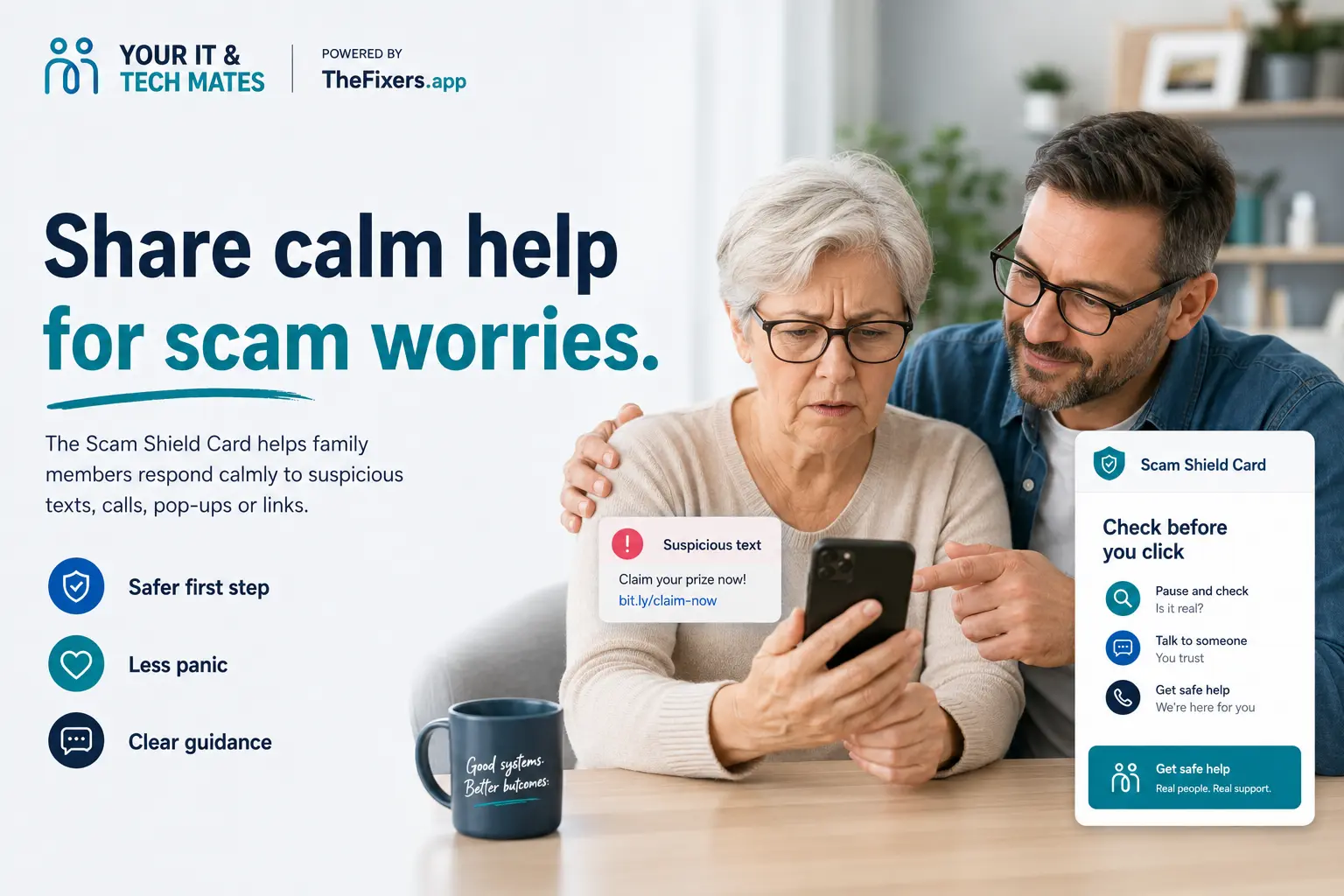
The Scam Shield Card is a simple way to send safe tech help to someone worried about suspicious texts, calls, pop-ups, links or payment requests. It gives them a calm next step without asking them to share passwords, banking codes, PINs or one-time codes.
Who this guide helps
- This guide helps readers share scam help carefully without becoming the expert or handling private codes.
- It uses plain-English steps, real examples and simple safety notes.
- It links to the referral page, share page, terms and privacy information when they matter.
Use the ready message and let the other person choose whether to continue.
Choose the person or problem, then send the matching card like a normal text.
Do not share passwords, banking codes, PINs or one-time login codes.
Stop
Do not send passwords, codes or private problem details to the person who referred you.
Try
Use a rescue card that matches the real problem, such as scams, printer, phone, student or business help.
Send
Send one clear message. The link stays attached and the other person decides whether to continue.

The Scam Shield Card is a simple way to send safe tech help to someone worried about suspicious texts, calls, pop-ups, links or payment requests. It gives them a calm next step without asking them to share passwords, banking codes, PINs or one-time codes.
A parent receives a fake delivery SMS. You choose the matching rescue card, pick the message style and send it. They can open it, read what happens next, and decide whether to ask for help.
Real examples
- A parent receives a fake delivery SMS.
- A grandparent sees a scary computer pop-up.
- A friend is unsure about a bank message.
- A neighbour gets a suspicious phone call.
- A student is worried about a fake account warning.
How this makes life easier
- Gives a calm next step before they click or pay.
- Reminds them not to share codes or passwords.
- Helps family without you becoming tech support.
- Keeps private help details between the customer and support.
- The person can decide whether to ask for help.
When to send it
Send the Scam Shield Card when someone feels unsure, rushed or worried by a digital message. It is best used before they click links, send money or share codes.
What it is not
It is not police, banking, financial, legal or emergency advice. If money has been stolen or there is immediate danger, they should contact the relevant bank, platform, police or emergency service.
How it makes life easier
Instead of trying to diagnose the scam yourself, you can send a simple card that points them to a calmer support path.
Safety and reward notes
Only share referral messages with people you know or reasonably think may want the information. Do not share passwords, banking codes, PINs, payment details, private student work or one-time login codes. If the person books and completes a paid job, you may receive up to 5% of the completed job value where the referral is eligible under the referral terms.
Frequently asked questions
More rescue-card guides
Related platform links
Send the right rescue card
Pick the card that matches the person or problem. They choose whether to continue, and private help details stay private.