How a Website Can Learn Which Call to Action Works Best for Different Customer Needs
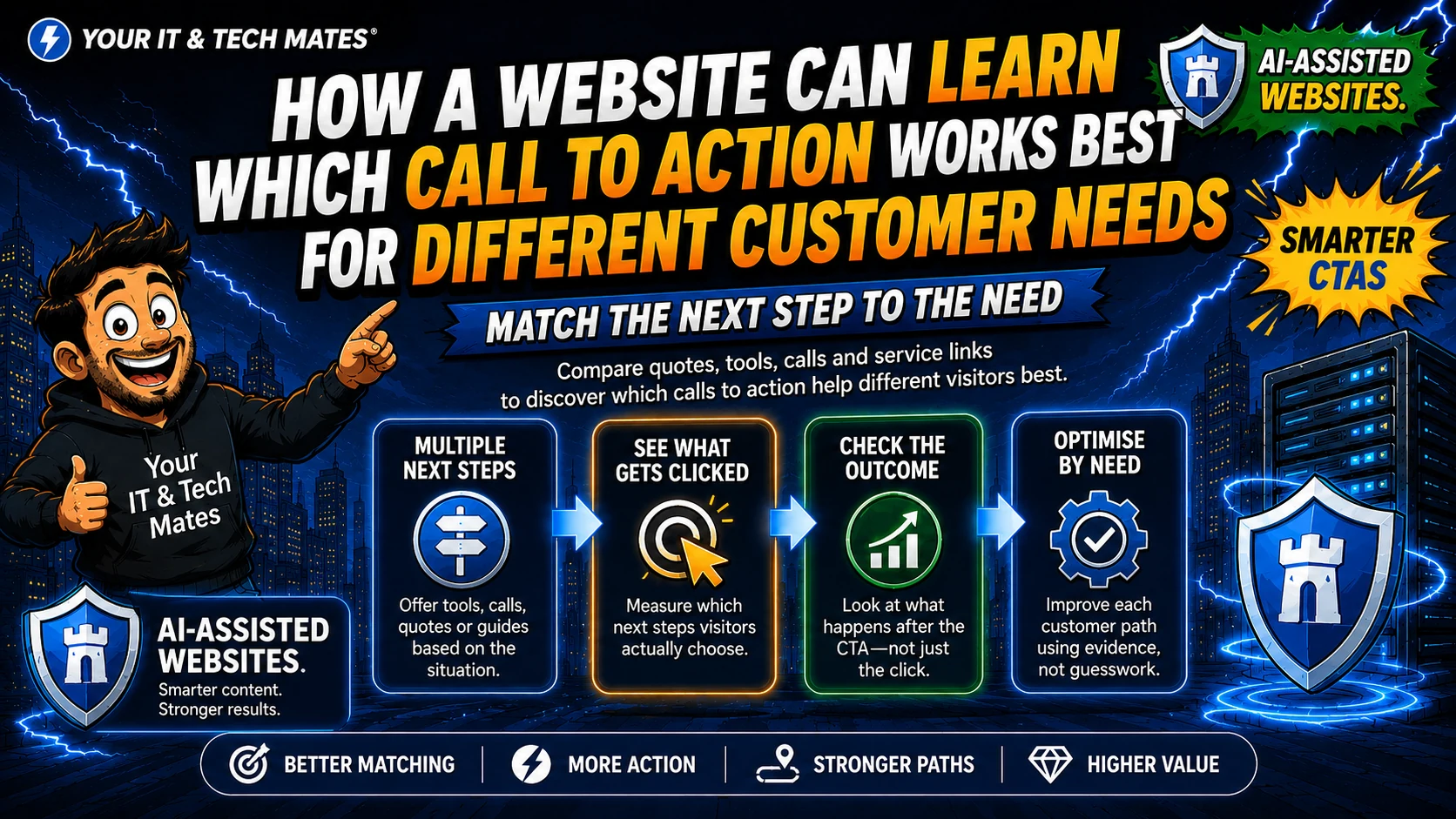
The best CTA is not always the biggest button. Measure what happens after a visitor chooses a guide, tool, call, service page or quote request.
Quick answer
A smarter website can compare which next steps visitors choose and what useful outcomes follow. Instead of optimising only click-through rate, it can learn whether a tool, service page, call or quote request is the better next step for a particular customer need.
Why one CTA cannot serve every intent
A visitor researching a slow laptop and a visitor urgently trying to book a repair should not necessarily see the same dominant action. The first may benefit from a diagnostic or repair-versus-replace guide; the second may be ready for QuoteMe.
Measure after the click
Click-through rate shows attraction, not usefulness. Better CTA evaluation checks whether the selected action is followed by a useful outcome, correction, completion or explicit abandonment.
Compare by customer need
An action can perform well for one intent and poorly for another. Group evidence by the likely need, confidence and journey stage before drawing conclusions. This is especially important when the site serves consumers, schools and businesses with different goals.
Do not auto-optimise production
Observed performance can be biased by page position, wording and audience mix. Treat the findings as recommendations for review and controlled testing rather than letting a live system silently rewrite priorities.
Business benefit
Better CTA matching can reduce pressure, shorten journeys and improve lead quality because customers are invited to take the next step that fits their situation.
Practical example: the same CTA is not right for every problem
A person who says 'my laptop battery is swelling' needs safety guidance and a repair path, not a generic newsletter or a long sales form. Someone comparing Microsoft 365 options may need an explanation or consultation. Someone whose internet is down at home may need troubleshooting before a quote. The best next action depends on what the customer is trying to achieve and how certain the website is about that need.
A useful CTA framework starts with a small approved set of actions such as read guidance, use a tool, start QuoteMe, request pickup, call for help or continue exploring. The Intent Engine can rank these, but the business should define which actions are allowed for each service and risk level.
Where it can go wrong: Optimising only for clicks can push customers into high-friction or premature forms. Measure whether the action led to a useful outcome, not just whether the button was pressed.
Related AI-assisted website guides
Continue with the guides that explain the underlying customer-experience, intent and governance ideas in more detail.
Frequently asked questions
What is CTA outcome optimisation?
It means evaluating calls to action by the quality of later customer outcomes, not only by how many people click them.
Should every page push QuoteMe?
No. Some visitors need a guide, tool or clarification first; others may already be ready to request help.
Can the best CTA vary by intent?
Yes. Different customer needs and journey stages can benefit from different next steps.
Should CTA priorities change automatically?
Not without safeguards. Observational findings are better treated as inputs to review and controlled testing.
Could your website make customer journeys easier?
Tell us where customers get stuck, repeat themselves, choose the wrong path or submit poorly matched enquiries. We can review whether clearer content, website logic, automation, custom software or bounded AI fits the problem.