
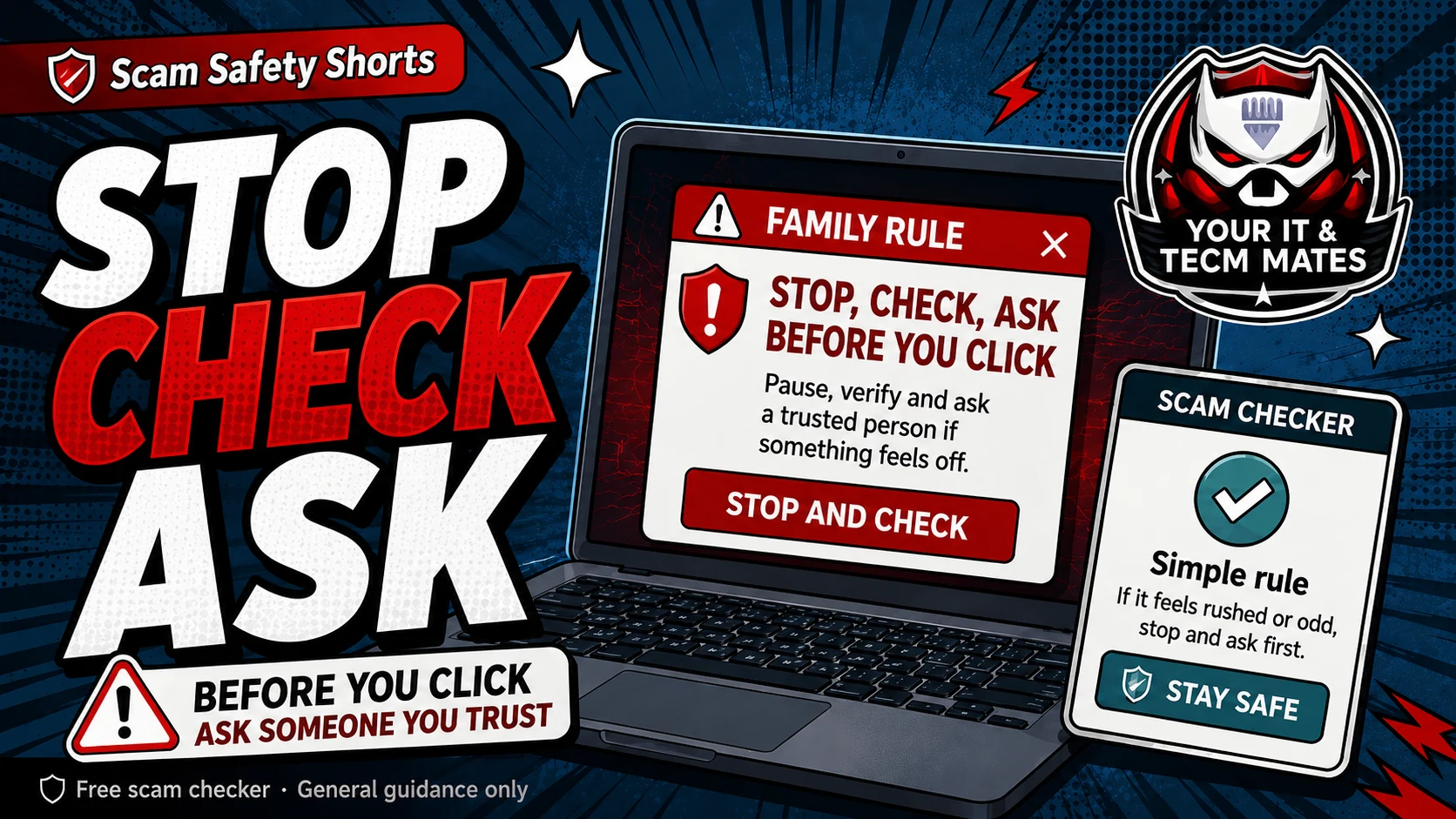
Quick answer: pause before sending anything
Do not send money, gift cards, crypto, identity documents or account access while you feel pressured.
Talk to someone trusted before replying again. Scammers often try to isolate people from family and friends.
Common warning signs
They avoid meeting or video calls, move the chat away from the platform, create emergency stories, ask for secrecy, or want you to receive and move money.
Gift cards, crypto and repeated small payments are serious warning signs.
What to save
Save the profile link, screenshots, phone numbers, email addresses, bank details, wallet details and receipts.
If you already shared identity details, use IDCARE or official identity support pathways and secure your accounts.
Use the free checker before the next step
These free tools are a first check only. They are not a guarantee. Do not enter passwords, one-time codes, card numbers or identity documents into a checker.
Benefits and practical outcomes
Use these outcomes as a practical check on whether the advice is making the situation clearer and easier to manage.
Slower decisions under pressure
A short verification pause can stop urgency from deciding what you click, pay or share.
Independent verification
Checking through an official app, known website or saved contact reduces reliance on the suspicious message itself.
Better evidence
Keeping messages, receipts and timestamps makes it easier to explain what happened if you need help.
Clear escalation
A simple next-step plan helps you know when to contact a bank, platform, provider or hands-on support.
Example: urgency plus a link
A message says action is required immediately and includes a link for payment or sign-in. The recipient does not use the link; they open the organisation’s official app or known website and verify whether any real alert exists.
Outcome: the decision is separated from the pressure created by the message.
Is it my fault if I trusted them?
No. Scammers are trained to build trust and pressure people. The safest step is to pause and ask for help early.
Should I confront them?
Save evidence first. If you confront them too early, they may delete the profile or chat history.
What if I sent money?
Contact your bank first, then use the Lost Money Next Step Helper and Scam Evidence Checklist.