How We Review AI-Written and Staff-Written Content Before It Goes Live
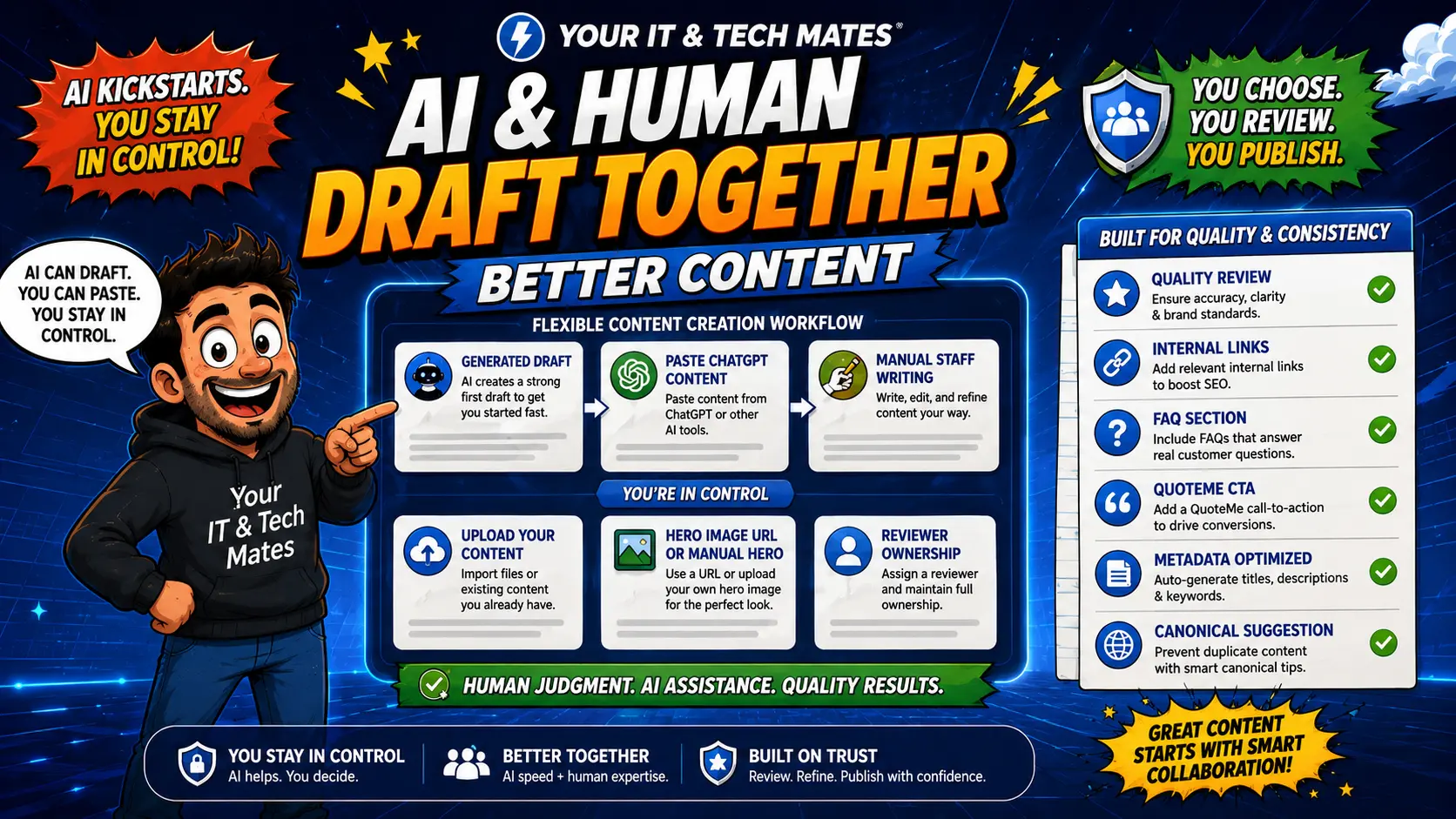
Staff can bring in a draft from ChatGPT, another AI tool, a document or their own writing. Everything goes through the same private review before anything is published.
Quick answer
Staff can bring in a draft from ChatGPT, another AI tool, a document or their own writing. Everything goes through the same private review before anything is published.
The practical problem
Content rarely starts in one place. A team may have staff notes, a draft from an AI tool or a planning document. The risky approach is to treat any one of those sources as automatically ready for the public website.
What we built
We use one private draft process for different kinds of source material. It organises the draft, checks where it belongs, suggests useful links and records who should review it before the separate publishing step.
How the workflow works
- Authorised staff choose or upload the source material.
- The system turns it into a consistent private draft.
- The draft is matched to an existing help area and useful website sources.
- Staff can choose to use AI for rewriting or filling gaps, but that step is optional.
- A person reviews the draft and marks it ready only when it is suitable.
- Publishing remains a separate human-approved step.
Where AI is useful
AI can help rewrite, organise or fill gaps when staff ask for it. Text from an outside AI tool is treated as a draft, not as a trusted business fact.
Where AI is not allowed to decide
AI cannot publish by itself, create a hidden content area, overwrite an existing public page or bypass duplicate and safety checks.
Security, privacy and cost controls
Uploaded source files stay private. Public page choices are checked against allowed website locations, and important claims, links and wording are checked again before publication.
What another small business can take from this
Let people use the writing tools that suit them, but bring every draft into one consistent review process before it becomes public business information.
What this does not prove
This workflow handles the document structures it was designed for. Complicated layouts, unclear plans or unsupported page types still need staff editing.
Part of our smarter website project
This implementation story is one part of a larger Your IT and Tech Mates project exploring how practical AI, automation, trusted business knowledge and human-controlled workflows can work together.
Frequently asked questions
Can staff paste in text from ChatGPT or another AI tool?
Yes. It is treated as draft material and still needs the normal review.
Can an uploaded document publish itself?
No. Uploaded material stays private until a person reviews and approves the finished draft.
Is AI required for every draft?
No. Staff-written content can move through the same workflow without an AI rewrite.
Does the workflow replace the publishing checks?
No. Drafting and publishing are separate steps with separate checks.
Why use one review process for different sources?
It keeps links, claims, reviewers and publishing rules consistent regardless of where the first draft came from.
Related Your IT and Tech Mates help
Could a similar workflow help your business?
Tell us how the process works today. We can look at whether better website logic, automation, custom software, AI—or something simpler—would be useful. A person reviews the request before any scope or price is agreed.