Why Our AI Cannot Publish a Blog Post by Itself
AI can help draft content, but a person must approve it. Before anything goes live, the system checks the exact draft, links, claims and page updates, and can roll back if something fails.
Quick answer
AI can help draft content, but a person must approve it. Before anything goes live, the system checks the exact draft, links, claims and page updates, and can roll back if something fails.
The practical problem
Writing a draft is much easier than deciding that it should become an official public statement. A new page can affect customer expectations, prices, policies, search results and future AI answers.
What we built
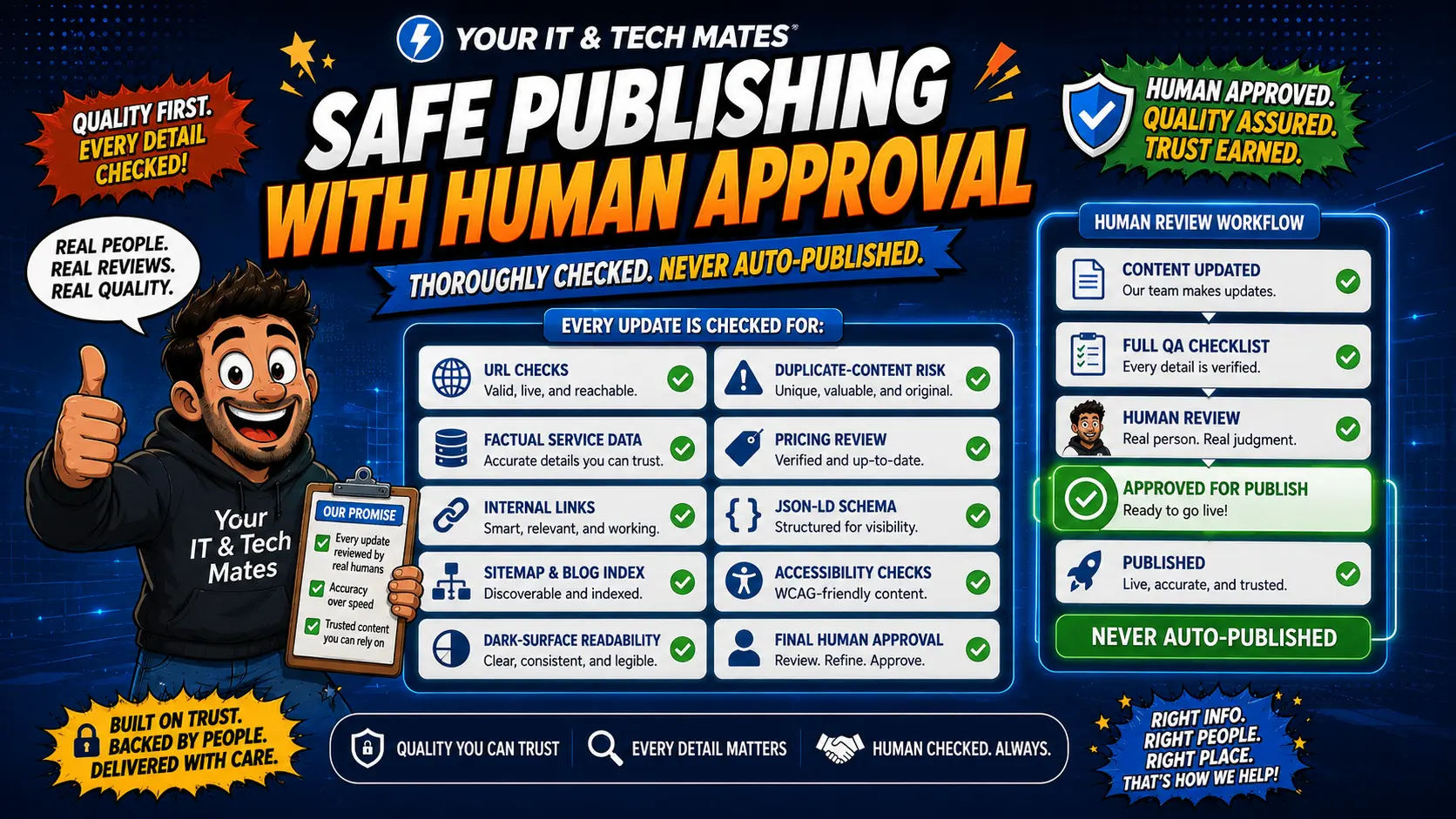
We keep drafting and publishing separate. Before publication, the system checks the page location, duplicate risk, important claims, links, reviewer, images, accessibility, structured page information and the correct customer next step.
How the workflow works
- Staff mark a private draft as ready for review.
- The publishing checks run against that exact draft and page address.
- A record is kept so later changes can be detected before publication.
- A person reads the final draft and explicitly chooses Approve & Publish.
- The checks run again before the files are changed.
- The public page, article list, sitemap, topic hub and reviewed knowledge list are updated together.
- If an important update fails, the previous public version can be restored.
Where AI is useful
AI may have helped write the draft earlier, but the final publishing decision is handled by clear checks and a person—not by asking AI whether its own work is safe.
Where AI is not allowed to decide
AI cannot press the approval button, ignore a failed check, change the page address after approval or turn an unverified price or NDIS claim into public fact.
Security, privacy and cost controls
Only one publishing action can update the shared website files at a time. The system uses safer file-writing steps so a partial failure is less likely to leave public information in an inconsistent state.
What another small business can take from this
Treat writing and authority as different jobs. AI can be useful for drafting, but pages that define services, prices, policies or commitments should still have a clear human approval step.
What this does not prove
The checks reduce avoidable errors but do not replace good editorial judgement or specialist legal review where it is needed. Real hosting permissions and rollback behaviour still need staging checks.
Part of our smarter website project
This implementation story is one part of a larger Your IT and Tech Mates project exploring how practical AI, automation, trusted business knowledge and human-controlled workflows can work together.
Frequently asked questions
Can AI publish a page by itself?
No. A person must approve the final draft before publication.
What if the draft changes after it was checked?
The publishing process checks again and can reject the action until the changed draft is reviewed.
What happens if part of publishing fails?
The process is designed to restore the previous public state instead of leaving a half-finished update.
Does AI decide whether pricing or NDIS wording is safe?
No. Important claims are checked by rules and human review.
Does this remove the need for editorial judgement?
No. Automated checks catch many problems, but people remain responsible for what the business publishes.
Related Your IT and Tech Mates help
- Software & AI solutions
- AI Automation for Small Business
- Explore the complete smarter website project
- How the intelligent customer-help system works end to end
- How drafts enter the controlled review process
- How approved content becomes available in search again
- How simultaneous publishing updates are handled safely
Could a similar workflow help your business?
Tell us how the process works today. We can look at whether better website logic, automation, custom software, AI—or something simpler—would be useful. A person reviews the request before any scope or price is agreed.