
Stop
Do not wait until the last minute if the issue affects study, campus work, proof of experience or a device you need for class.
This guide is organised for quick decisions, safer checks and clearer next steps.
Learn how Your IT & Tech Mates uses Ambassador zones for streets, suburbs, buildings and campuses to make local tech help easier to find.
Use the guide to choose the right next step and avoid spending time or money in the wrong place.
Keep the model, symptom, photos, error messages and timing together before asking for help.
Use this guide first, then choose Quick Help or the most relevant local service page.
Do not wait until the last minute if the issue affects study, campus work, proof of experience or a device you need for class.
Read the practical steps, gather the details you already have and choose the pathway that best matches your situation.
Use the linked pathway or Quick Help if you need a real person to point you to the next step.
Choose the step that solves the real problem first, then avoid adding extra tools, bookings or work until the next action is clear.
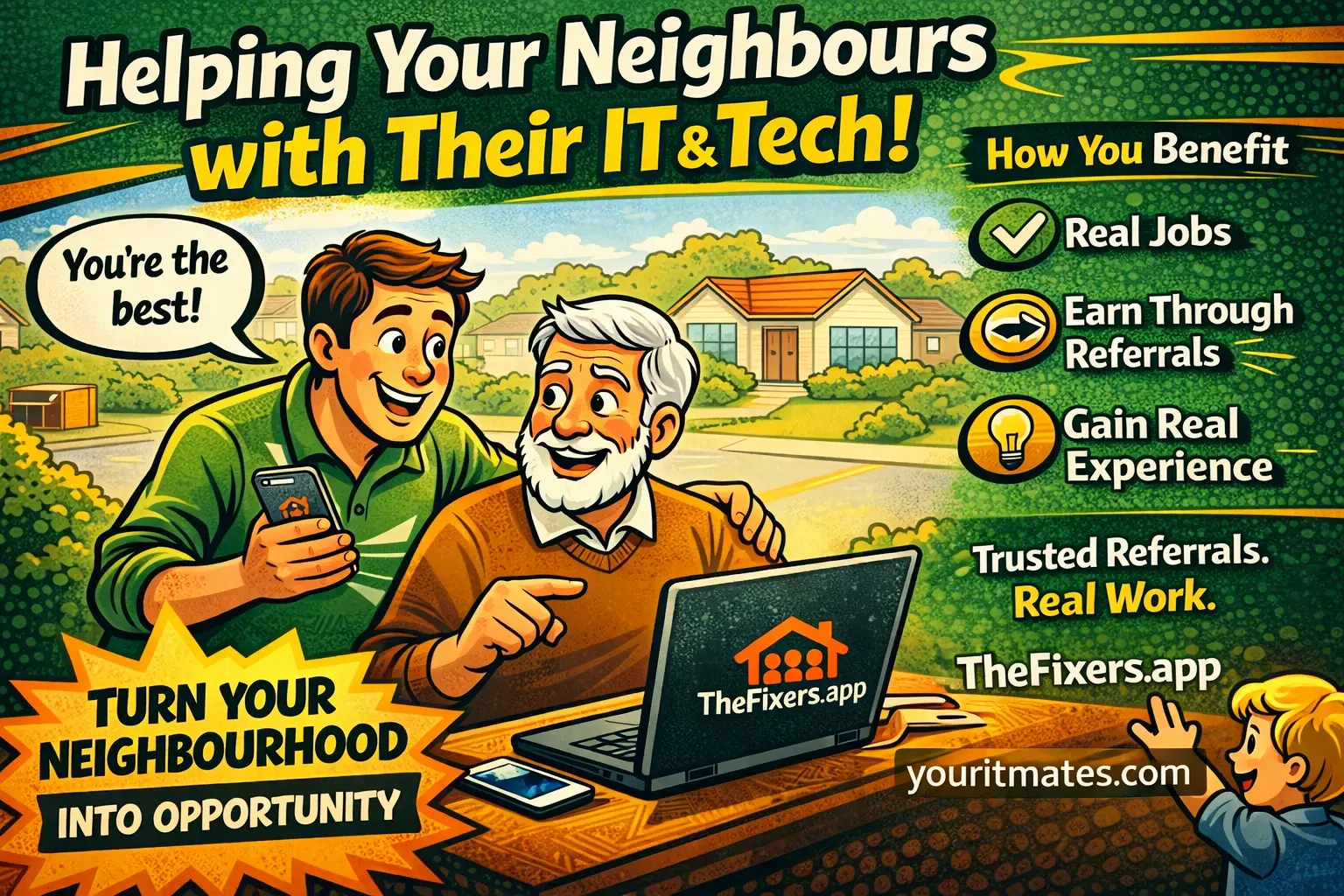
Ambassador zones help Your IT & Tech Mates organise local tech help around real places, such as a street, suburb, apartment building, campus or community group. A Zone Leader can help people in that area find the right Quick Help path, but zone leadership is reviewed by admin and does not give automatic control over jobs, payments, private customer details or provider approval.
A resident in an apartment building often helps neighbours with simple tech questions. They apply as a Building Zone Ambassador. If approved, they can share a local QR code, introduce residents to Quick Help and report common needs to the team. They do not see private job notes or approve providers themselves.
People usually trust help more when it feels local, clear and connected to a real place. A zone gives the Ambassador Network a simple local structure without creating an open marketplace or public competition between providers.
A Building Zone is useful for apartments, retirement villages and student accommodation. A Street Zone suits a small local pocket. A Suburb Zone supports a broader community. A Campus Zone helps students and staff find safer technology support. The system terms zones from most specific to broadest.
A Zone Leader can share approved links, explain Quick Help, introduce local providers for approval and support local campaigns. They cannot approve providers, assign jobs, see private support records, control prices or trigger payments.
Zone leadership is not a permanent lock. A leader can be provisional, active, shared, waitlisted, under review, demoted or released. If another person wants the same zone, the team can add them to the waitlist or split the area.
Explore the Ambassador Network, choose the local zone that matches your community and submit a request for review when you are ready.
Local tech help, powered by trusted connections.