
Stop
Do not wait until the last minute if the issue affects study, campus work, proof of experience or a device you need for class.
When to Ask for Guidance Before Helping With Tech. Use guidance, review and sign-off when a job is unclear or bigger than expected. A plain-English student guide from Your IT and Tech Mates and thefixers.app.
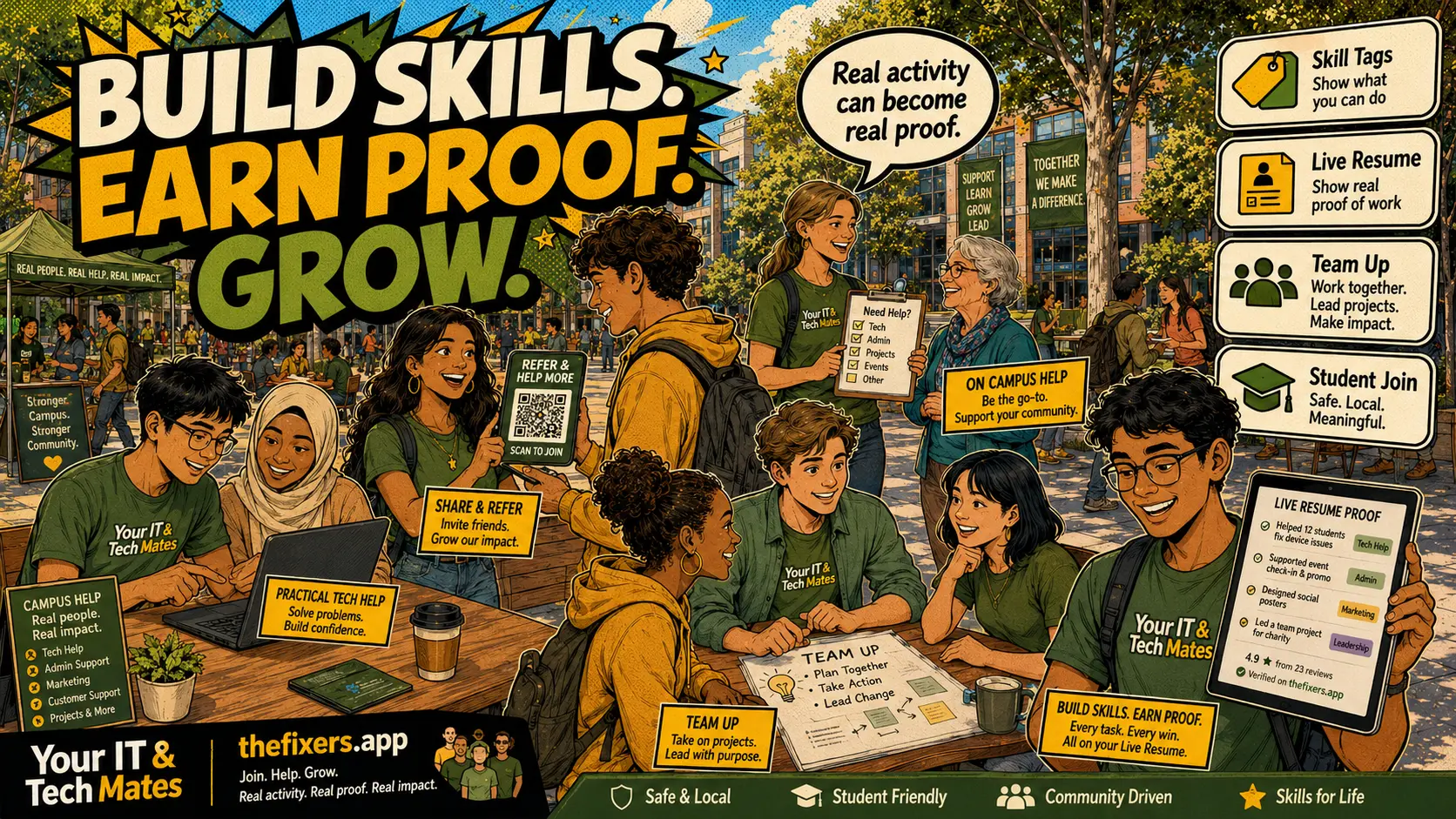
Student experience pathway
TheFixers.APP pathway is designed for students who need practical experience before they already have a long work history. A student can start with small, safe tasks, build confidence, collect reviewed proof, and turn that activity into a clearer Live Resume story.
This guide is organised for quick decisions, safer checks and clearer next steps.
Pause when the job feels unclear. Use guidance, review and sign-off when a job is unclear or bigger than expected.
Use the guide to choose the right next step and avoid spending time or money in the wrong place.
Keep the model, symptom, photos, error messages and timing together before asking for help.
Use this guide first, then choose Quick Help or the most relevant local service page.
Do not wait until the last minute if the issue affects study, campus work, proof of experience or a device you need for class.
Read the practical steps, gather the details you already have and choose the pathway that best matches your situation.
Use the linked pathway or Quick Help if you need a real person to point you to the next step.
Choose the step that solves the real problem first, then avoid adding extra tools, bookings or work until the next action is clear.
Use guidance, review and sign-off when a job is unclear or bigger than expected. This matters because students need a pathway that feels possible, safe and useful for the future, not pressure to pretend they already know everything.
Start small. Choose a job you can explain clearly, then set boundaries before you begin. A good student tech help job has a clear problem, a safe first step and a way to pause if the work changes.
For Melbourne's north students, this can mean helping a family member, neighbour, community group or small local business with everyday tech such as Wi-Fi basics, printer setup, cloud folders, phone settings or digital confidence. The point is not to overpromise. The point is to learn safely while helping someone who needs patient support.
If you are unsure, say so early. A student who pauses and asks for guidance is more trustworthy than a student who guesses. That is how experience becomes real proof rather than a risky shortcut.
Start with the gateway, then request access or guidance when you are ready for suitable opportunities.
This guide is part of the broader student pathway. The goal is not only to complete one task. It is to help students practise real workplace behaviours: communication, organisation, customer support, admin confidence, trust, guidance, payment confidence, teamwork and live-resume proof from real activity.
Every suitable student help activity gives students a chance to listen, ask clearer questions, explain next steps and update people calmly. Those examples are useful in interviews because they show how the student worked with a real person, not only what they know in theory.
Students can build admin skill by keeping notes, tracking requests, confirming outcomes, checking follow-up and closing the loop properly. This is valuable for customer service, business, campus support, operations and project roles.
Good student support is calm, clear and honest. A student does not need to pretend to be an expert. They need to explain what they can help with, protect private information and ask for guidance before risky work.
When students use Team Up, referrals, campus support or guidance, they can practise role clarity, handover, time management and people management. These skills are useful for group projects, part-time work, internships and future leadership roles.
Real activity can become proof when it is recorded honestly. A student can connect the work to skill tags, approved feedback, guidance notes, role summaries and live-resume examples that explain what they actually did.
Yes. Students can build proof through communication, admin, marketing, customer support, referrals, organisation, project support and campus help, not only technical tasks.
It gives students real examples of communication, follow-up, teamwork, judgement, customer care and problem solving they can explain in interviews.
Yes. Campus support can include peer help, referrals, ambassador activity, event support, admin follow-up, practical help requests and Team Up projects.
Guidance helps students pause before unclear or risky work, ask better questions and avoid overpromising.
Approved reviews, skill tags, role summaries, follow-up completed, customer support examples, campaign activity and team contributions can become live-resume proof.
They should use clear boundaries, official app workflows, privacy care, guidance and honest proof instead of risky shortcuts.
It shows student work can be structured around safety, employability and real-world confidence rather than random tasks.
Keep building proof