
Stop
Do not wait until the last minute if the issue affects study, campus work, proof of experience or a device you need for class.
Schools, TAFEs and universities can support student helpers by keeping requests appropriate, using guidance, recognising skills and making campus help visible but safe.
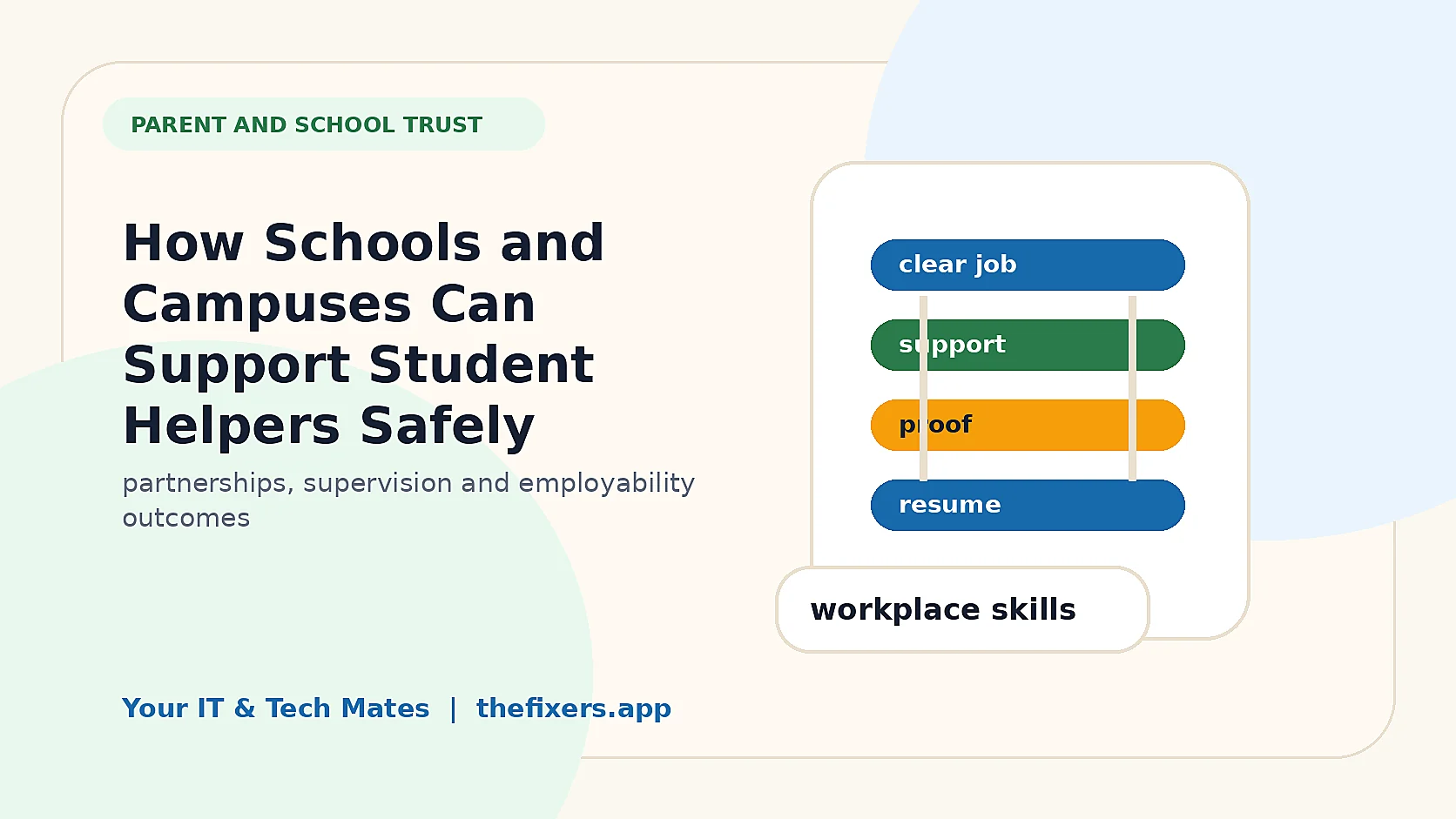
Student experience pathway
TheFixers.APP pathway is designed for students who need practical experience before they already have a long work history. A student can start with small, safe tasks, build confidence, collect reviewed proof, and turn that activity into a clearer Live Resume story.
This guide is organised for quick decisions, safer checks and clearer next steps.
A guide for schools, TAFEs and universities on safer student helper pathways, campus support, guidance, skill tags and employability proof.
Use the guide to choose the right next step and avoid spending time or money in the wrong place.
Keep the model, symptom, photos, error messages and timing together before asking for help.
Use this guide first, then choose Quick Help or the most relevant local service page.
Do not wait until the last minute if the issue affects study, campus work, proof of experience or a device you need for class.
Read the practical steps, gather the details you already have and choose the pathway that best matches your situation.
Use the linked pathway or Quick Help if you need a real person to point you to the next step.
Choose the step that solves the real problem first, then avoid adding extra tools, bookings or work until the next action is clear.
Schools, TAFEs and universities can support student helpers by keeping requests appropriate, using guidance, recognising skills and making campus help visible but safe. This matters because the student pathway is not only about tech help. It can help students practise workplace habits: communication, admin, payment confidence, customer support, trust, guidance, and live-resume proof from real campus or community support.
thefixers.app can help students turn suitable real help jobs into employability proof by keeping requests clear, using guidance, recording approved outcomes, recognising skills and linking the work to a live resume.
Students often need proof before they get their first serious job. They may be reliable, patient and capable, but a resume can look thin if the experience is only informal. Suitable help jobs can close that gap when they are handled properly.
The goal is not to make students sound like experts before they are ready. The goal is to help them practise real workplace behaviours in safe situations: listening, checking scope, giving updates, using clear payment processes, asking for guidance and following up.
The existing app features help turn casual help into a clearer pathway. Job boards and campus help requests make the work easier to understand. Guidance helps students pause before risky work. Customer portals and dashboards support communication. Invoice and official payment workflows reduce confusion. Reviews, skill tags and live resume pages turn completed work into honest proof.
A student accepts a suitable campus or community help request. Before starting, they check the scope, payment expectations and whether guidance is needed. During the job, they give simple updates and avoid private data they do not need. After the job, they record the approved outcome, review what they learned and connect it to a skill tag or live resume story.
Students should avoid unclear paid work, private payment shortcuts, hidden access, pressure from customers, assessed academic work, risky account changes, promises they cannot keep and anything that should be handled by staff, campus support or an experienced provider.
Saying “I need to check this first” can be a professional answer. It shows judgement, not weakness.
This student pathway is designed to build more than one practical skill. It can help a student practise communication, admin habits, payment confidence, customer support, trust, guidance and live-resume proof from real campus or community help.
Start small, keep the task clear, avoid private or risky work, and use guidance before guessing. The aim is safe experience and real proof, not pretending to be an expert.
Start small, keep the task clear, avoid private or risky work, and use guidance before guessing. The aim is safe experience and real proof, not pretending to be an expert.
Start small, keep the task clear, avoid private or risky work, and use guidance before guessing. The aim is safe experience and real proof, not pretending to be an expert.
Start small, keep the task clear, avoid private or risky work, and use guidance before guessing. The aim is safe experience and real proof, not pretending to be an expert.
It gives the student a real example of workplace behaviour: communication, admin, judgement, follow-through and trust. Those are useful in interviews because the student can explain what happened, what they did and what they learned.
Start small, keep the task clear, avoid private or risky work, and use guidance before guessing. The aim is safe experience and real proof, not pretending to be an expert.
Start small, keep the task clear, avoid private or risky work, and use guidance before guessing. The aim is safe experience and real proof, not pretending to be an expert.
Read next: How Guidance Makes Student Help Safer for Everyone, or return to the student gateway.
Students can build confidence through real campus and community support when the work is clear, guided, trusted and recorded as approved proof.
Keep building proof