
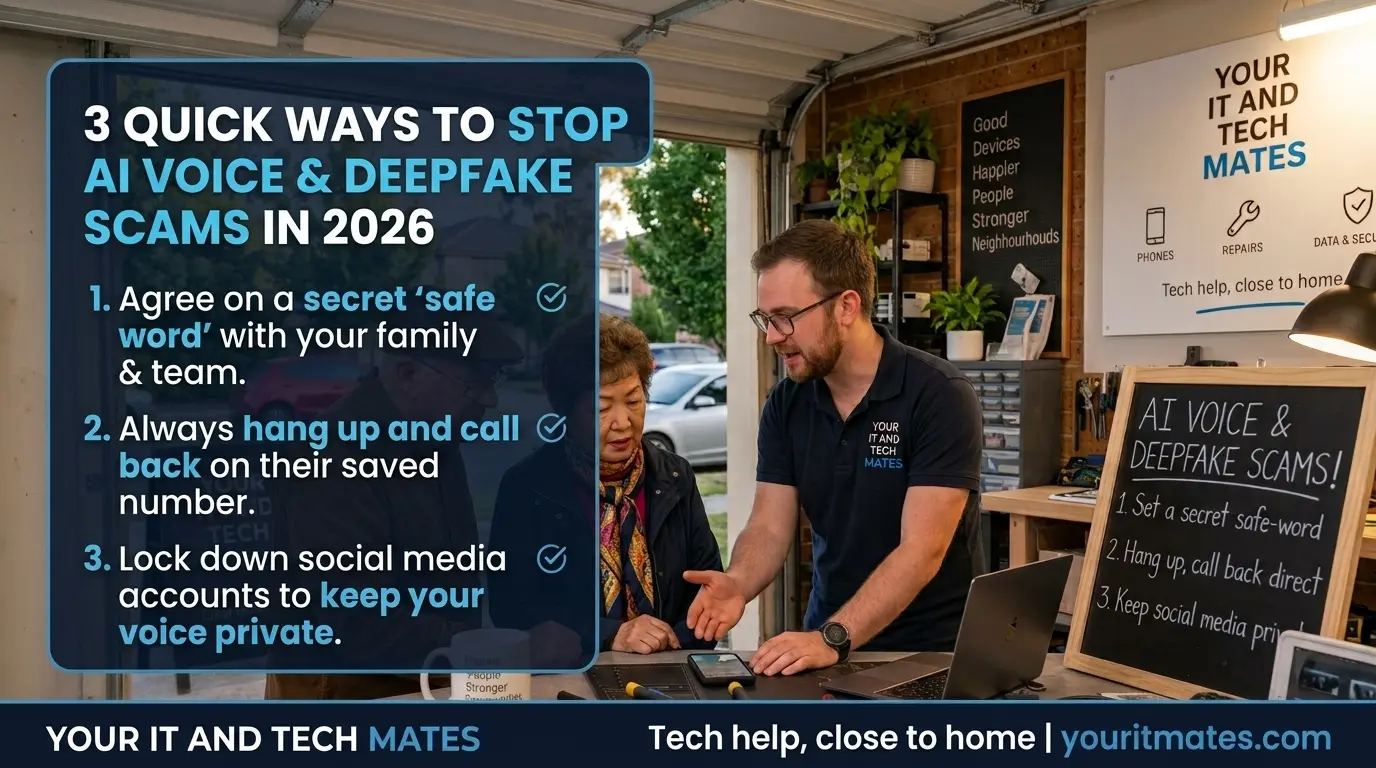
Three checks that matter most
These are simple enough for a family, office or small business to agree on before the next urgent call arrives.
Use a private safe word
Agree on a word or question that is not public on social media. It is an extra check when someone claims there is an emergency, but it should not replace calling the person back directly.
Hang up and call back
Use the number already saved in your phone, staff directory or supplier record. Do not use a number supplied by the caller, text or voice message.
Reduce public voice exposure
Review who can see or download public videos and voice clips. Privacy controls cannot eliminate risk, but they can reduce easy access to material that may help an impersonator.
“Mum, I need money now” can sound convincing
The dangerous part of an AI voice scam is not whether the voice is technically perfect. It is the combination of a familiar-sounding voice, urgency and a believable story. The caller may claim to be injured, stranded, locked out of an account, dealing with police, or unable to use their normal phone.
For a business, the same pattern can look like a manager asking accounts staff to make an urgent transfer, a supplier requesting changed bank details, or a director sending a voice note asking someone to bypass normal approval.
Create a family or business safe word
A safe word gives people one more way to challenge an unexpected urgent request. Keep it private, avoid obvious words such as a pet name that appears online, and change it if you think it has been exposed.
For a small business, use a documented verification rule as well: unusual transfers, bank-detail changes or requests to bypass normal process should require confirmation through a trusted contact method and, for higher-risk payments, a second person.
Hang up and call back using a trusted number
If the caller claims to be a family member, staff member, manager or supplier, end the call. Then contact them using a number already saved or obtained from an official source you trusted before the incident.
Do not trust caller ID by itself. Do not call a number read out by the suspicious caller. If the situation involves a supplier or bank-detail change, use the contact details already held in your accounting or supplier records.
Review public video, audio and social profiles
Public clips can reveal a person's voice, family relationships, workplace, travel plans and everyday language. Review privacy settings and think carefully about what is visible to strangers, especially for children, seniors, executives and staff who can approve payments.
This is not a reason to stop sharing online. It is a reason to avoid treating information that is easy to find online as proof of identity.
Do not let a voice note override your payment process
Keep payment approvals separate
An urgent call from “the boss” should not be enough to change a supplier bank account or release an unusual transfer.
Verify changes out of band
Call the supplier or manager using contact details already on file. Record who verified the request and how.
Use two-person approval where practical
For higher-risk or unusual payments, a second person can catch pressure tactics that one person may miss.
What to do now
- Stop the payment or account change. Do not send money, passwords or one-time codes.
- Call the person back independently. Use a trusted saved number or official contact path.
- Check other channels. Ask another family member, colleague or supplier contact if needed.
- If money was sent, contact the bank immediately. Speed matters when attempting to stop or recover a transfer.
- Preserve evidence. Save the number, voicemail, message, payment details and time of contact.
Related guides
Hi Mum / new number scams
Use a trusted old number or another family contact before sending money.
Fake tech-support calls
Recognise remote-access pressure and fake support identities.
Scam safety for seniors and families
Build a simple household verification routine before an urgent request happens.
Small-business scam check before paying
Pause and verify unusual invoices or payment instructions.
FAQ
Can scammers clone a voice from a short recording?
Voice-cloning technology can imitate people from relatively small audio samples. The practical response is not to judge the voice alone: verify urgent requests through a trusted channel.
Should every family use a safe word?
It can be a useful extra layer, especially for emergency-money requests. Keep it private and still call the person back independently.
What if the caller knows private details about us?
Do not treat familiar details as proof. Names, workplaces, travel details and relationships can be gathered from public profiles, previous data breaches or social engineering.
Can Your IT & Tech Mates prove whether a recording is AI-generated?
Not from a normal customer enquiry alone. We can help you review the situation, secure affected devices or accounts and choose safer verification steps, but we should not promise forensic certainty from a voice clip.
Tell us what happened in your own words
If the issue is a suspicious call, account concern or device-access problem, QuoteMe can carry this article context into the existing Your IT & Tech Mates service journey without assuming a diagnosis.