What Does an AI Tech Support Tool Actually Understand About Your Problem?
The goal is not mind-reading. It is to build a small, correct picture of the problem and let you confirm it before the system recommends anything.
Quick answer
A useful AI support tool should turn your description into a small, reviewable understanding of the device, symptoms and context, not pretend it knows more than it does.
Understanding should be bounded
A support tool does not need a complete diagnosis to be useful. It may only need to understand the device category, main symptom, what has been tried and whether there is a safety concern.
Separate observations from conclusions
“Battery is swollen” is an observation. “Battery cell failure caused it” is a diagnosis. Keeping those different prevents the system from sounding more certain than the evidence supports.
Confidence is not the same as certainty
The system may have a strong match to a help area while still needing a technician to confirm the root cause. Good interfaces communicate that distinction clearly.
Let the customer review the summary
A simple summary such as “Windows laptop; Wi-Fi connected; websites not loading; other devices working” is easy to verify and correct.
Corrections are valuable
When customers say “not quite” and adjust the summary, that feedback can reveal weak wording, poor questions or confusing categories without automatically rewriting production rules.
The system should know its limits
When there is not enough information, the correct behaviour is clarification or a safe fallback, not a confident-looking guess.
A realistic example: separating facts from interpretation
A customer writes, “My computer was hacked because Chrome keeps opening strange ads.” The observable facts may be that pop-ups appear in Chrome, the behaviour started yesterday and other apps seem normal. “Hacked” is an understandable concern, but it is not yet a confirmed diagnosis. A well-designed support tool should preserve that distinction.
What the customer said versus what the tool should carry forward
- Customer concern: “I think I have been hacked.”
- Confirmed observations: Unexpected ads appear in Chrome; started yesterday; no confirmed account compromise reported.
- Customer benefit: The handover captures the seriousness of the concern without converting a possibility into a fact.
Useful understanding is a reviewable summary
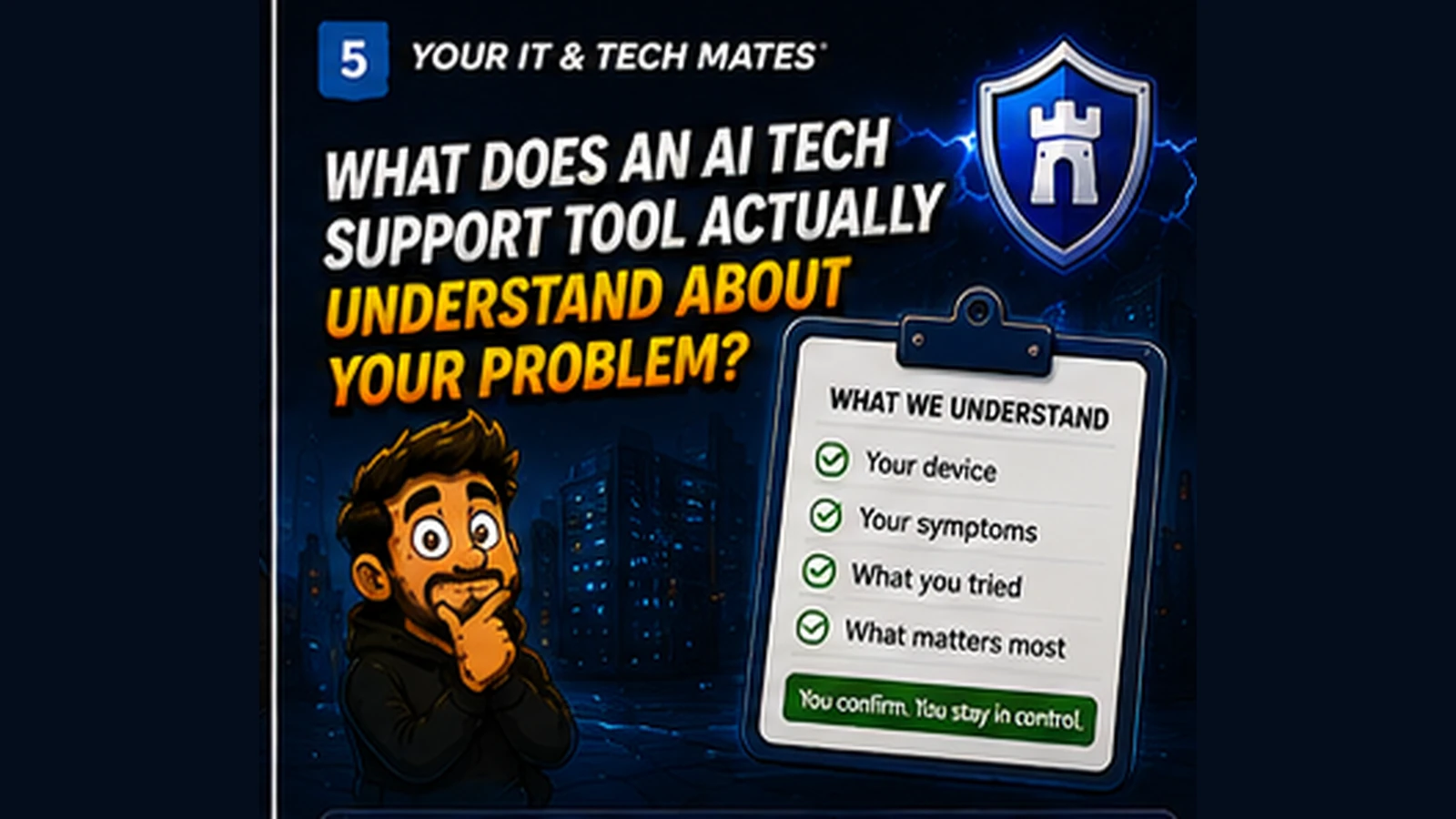
The customer should be able to see a short summary such as affected device, main symptom, timing, relevant changes and what has already been tried. If something is wrong, they should be able to correct it. That makes the system’s understanding a shared working note rather than a hidden judgment.
The right question is not “Does the AI know?”
A better question is: “Has the tool captured enough confirmed context to recommend a sensible next step?” That keeps the goal practical and bounded. It also creates a clear place for uncertainty, correction and human review.
Frequently asked questions
Does AI know exactly what is wrong with my computer?
Usually not from a short description alone. It can identify likely help areas and useful next questions while keeping the final diagnosis appropriately cautious.
Why show a “What we understand” summary?
It lets you verify the important context before it influences the recommendation or handover.
What happens if the summary is wrong?
You should be able to correct it. The support flow can then reinterpret the updated context or ask another targeted question.
How this connects to our Guided Tools
Our Guided Tools are designed to let customers describe a problem naturally, answer a small number of relevant questions, review what the system understands and then choose the next step. Quick-choice tools remain available as a fallback, and QuoteMe stays customer-controlled.
Need help with a real tech problem?
Tell us what is happening in plain English. We will help you work out the most useful next step without expecting you to diagnose it first.