Answer First, Enquiry Second: Why Our AI Website Helps Before Asking
A customer should not have to hand over contact details just to learn whether they are in the right place. We designed the journey to return useful guidance first, then offer the enquiry as a natural next step.
Quick answer
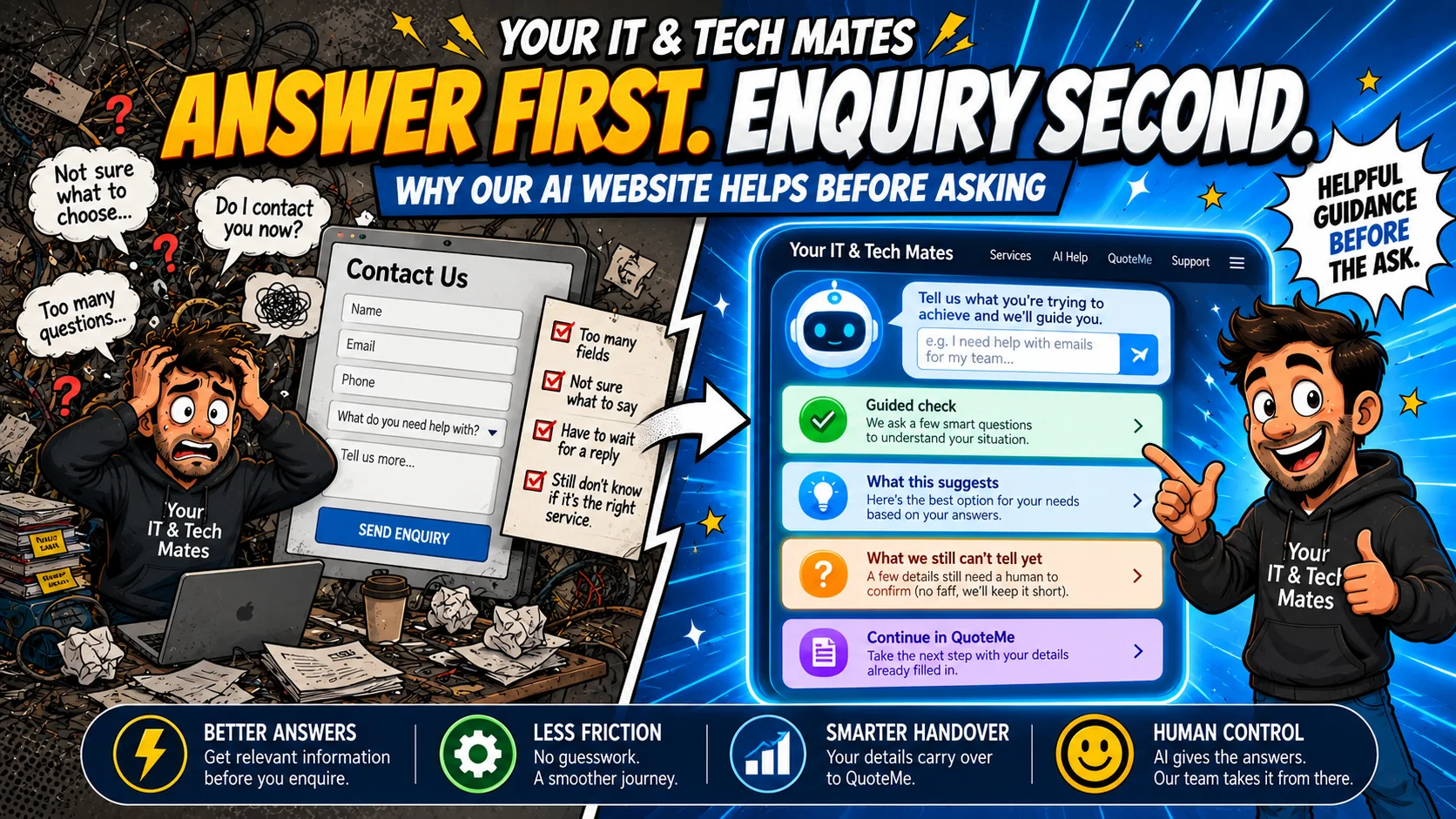
Our preferred pattern is answer first, enquiry second: understand enough of the customer’s situation to provide a safe, useful result, explain the uncertainty, and only then invite them to continue into QuoteMe if they want a technician to review the problem.
The old website pattern starts with the business
Traditional service websites often lead with a menu of services and a contact form. That can work when customers already know exactly what they need. It works less well when the person only knows the symptom: “Wi-Fi keeps dropping”, “my laptop has a black screen”, or “I am not sure whether this is worth repairing”.
Asking for name, phone, suburb and a long message before giving any help puts the business workflow ahead of the customer’s immediate question.
A better first question is what the customer is trying to solve
An AI-assisted or intent-driven website can begin with the customer’s own wording and then use a small number of reviewed questions to narrow the situation. The goal is not to keep the customer chatting. The goal is to reach a useful next step with less guessing.
Give a result before the call to action
The result should do real work. It might explain that a charging light alone does not identify a failed component, that an error message should be photographed before a reset, or that a swollen battery means normal troubleshooting should stop.
That result builds trust because the website has helped before asking for anything in return.
Show what the system still cannot tell
One of the most important parts of the result is uncertainty. “This suggests a display or startup path” is different from “your screen is faulty”. A useful website should say what the answers point toward and what still needs a person, a model-specific instruction or hands-on testing.
Make the enquiry a continuation, not a restart
If the customer decides they want help, the next screen should not ask them to repeat the same problem. The confirmed symptom, safe checks already tried and backup status can continue into QuoteMe. The customer reviews those details before sending.
That creates a smoother handover and gives the technician a better starting point without bypassing existing price, routing, payment or submission rules.
Why human control still matters
AI is useful for language, clarification and pattern matching. It should not silently approve paid work, invent a diagnosis or make a commercial promise. Human review is especially important when there are safety issues, data risk, unclear scope or multiple reasonable repair paths.
What this means for another small business website
You do not need a giant chatbot. Pick one high-friction customer journey and ask: what useful answer can we give before asking for an enquiry? Then make the form a continuation of that help. This can reduce unnecessary questions, improve lead quality and make the website feel more like a useful member of the team.
Frequently asked questions
Does answer first mean every visitor gets an AI diagnosis?
No. The answer can be guidance, a safer next step or a clarification. It should not claim more certainty than the information supports.
Why not just use a shorter contact form?
A shorter form reduces effort, but it still may not answer the customer’s immediate question. Guided help can give value before the enquiry.
Can customers still go straight to QuoteMe?
Yes. The guided path should improve the journey for people who need help deciding, not block customers who already know they want to make a request.
Related reading
Need tech help now?
Start with the problem in your own words. QuoteMe can carry useful context forward, and you can review the request before sending it.