
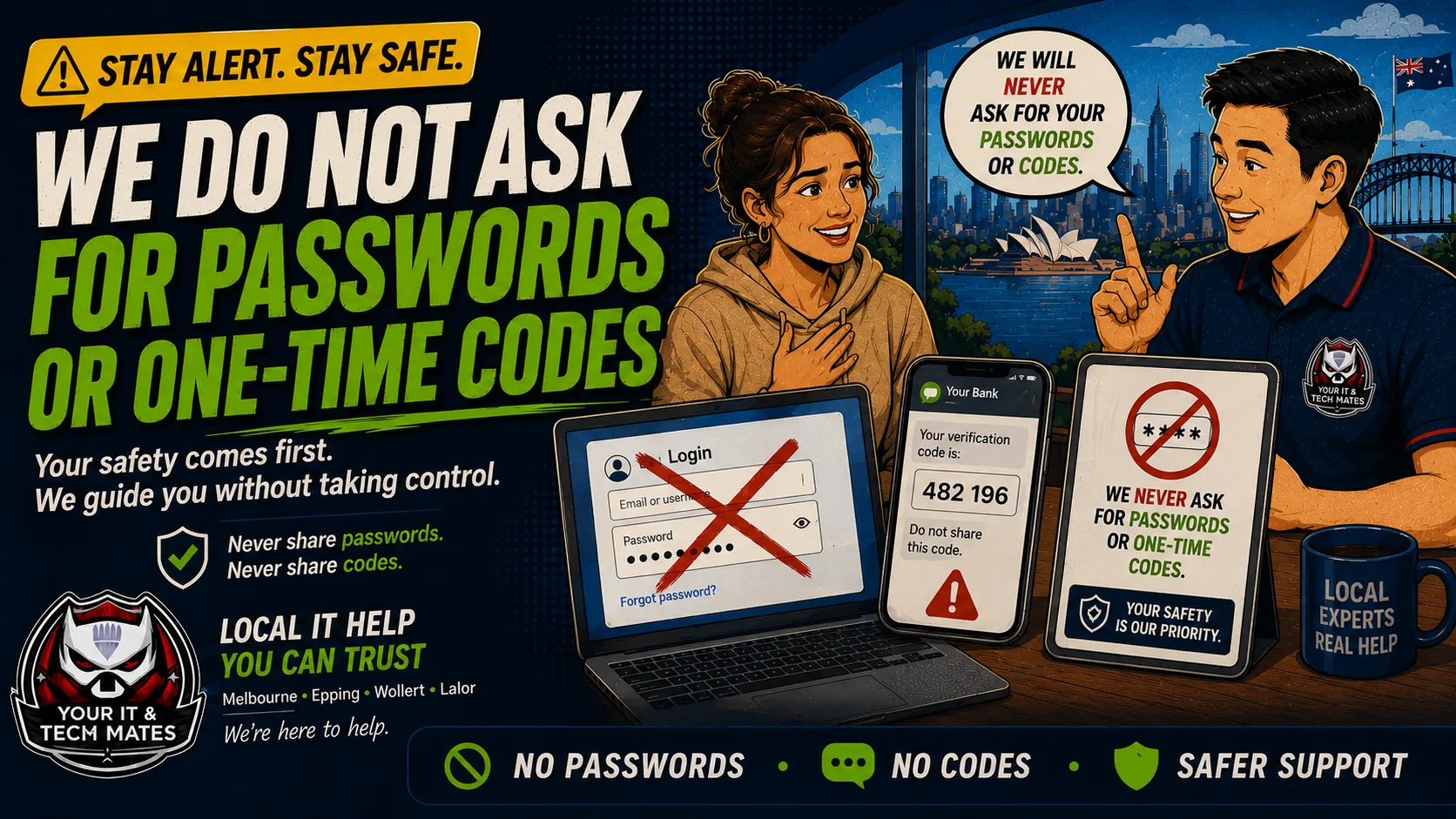
Passwords remain private
Customers enter passwords themselves when needed. They should not read them aloud, send them in messages or place them in booking notes.
One-time codes are also private
A one-time security code can approve a login, password reset or payment. Customers should never give these codes to a technician or unexpected caller.
We guide without taking control
A technician can explain where to click and what to check while the customer keeps control of their own account and device.
Stop if something feels wrong
If anyone asks for a password, PIN, banking login or one-time code, pause and verify who they are using an independent contact method.
Try the scam tools related to this guide
Use these free checks for a first review. They can help you slow down, identify warning signs and prepare useful details before deciding whether hands-on support is needed.
Do not enter passwords, one-time codes, banking login details, full card numbers or identity document numbers into a public checker.
Need hands-on scam help?
Tell us what happened in your own words. Do not include passwords, one-time codes, banking login details or full card numbers.