
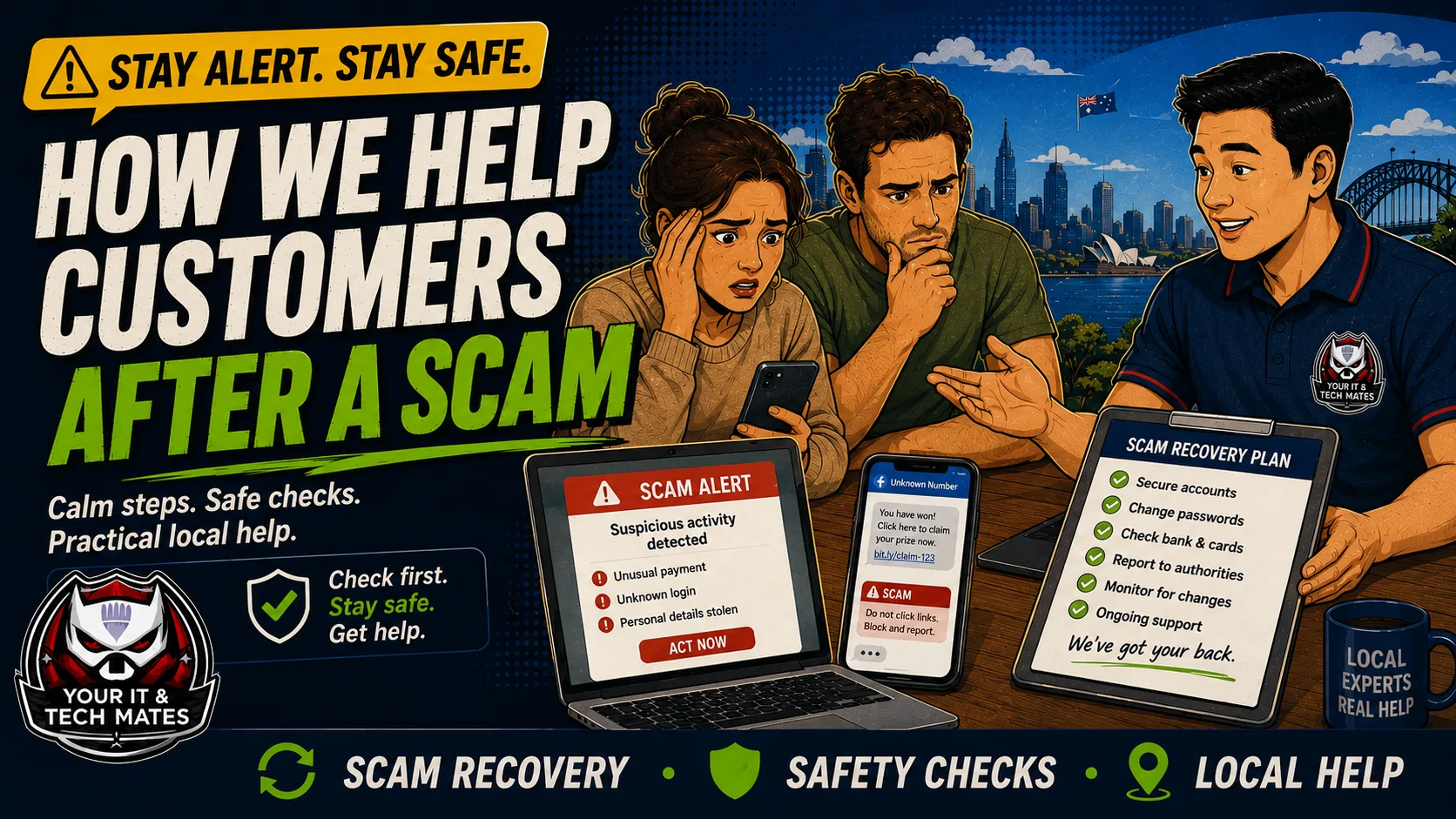
Start with immediate safety
We first identify urgent risks. If money or banking is involved, the customer is encouraged to contact the bank first. If a person is in danger or being threatened, emergency services come before technical work.
Understand what happened
The technician listens without blame and records a plain-English summary of what was clicked, installed, shared, approved or paid.
Protect evidence before cleanup
Suspicious messages, screenshots, payment references and relevant account activity may be useful later. Evidence is considered before files, messages or applications are deleted.
Agree on the safest next steps
Important actions are explained before they are performed. The customer remains in control and receives clear findings and practical follow-up steps.
Try the scam tools related to this guide
Use these free checks for a first review. They can help you slow down, identify warning signs and prepare useful details before deciding whether hands-on support is needed.
Do not enter passwords, one-time codes, banking login details, full card numbers or identity document numbers into a public checker.
Need hands-on scam help?
Tell us what happened in your own words. Do not include passwords, one-time codes, banking login details or full card numbers.