The practical problem
A dashboard can make a process look successful without proving that customers benefited. The first question is what evidence would actually tell your team whether a change helps.
A human-reviewed workflow
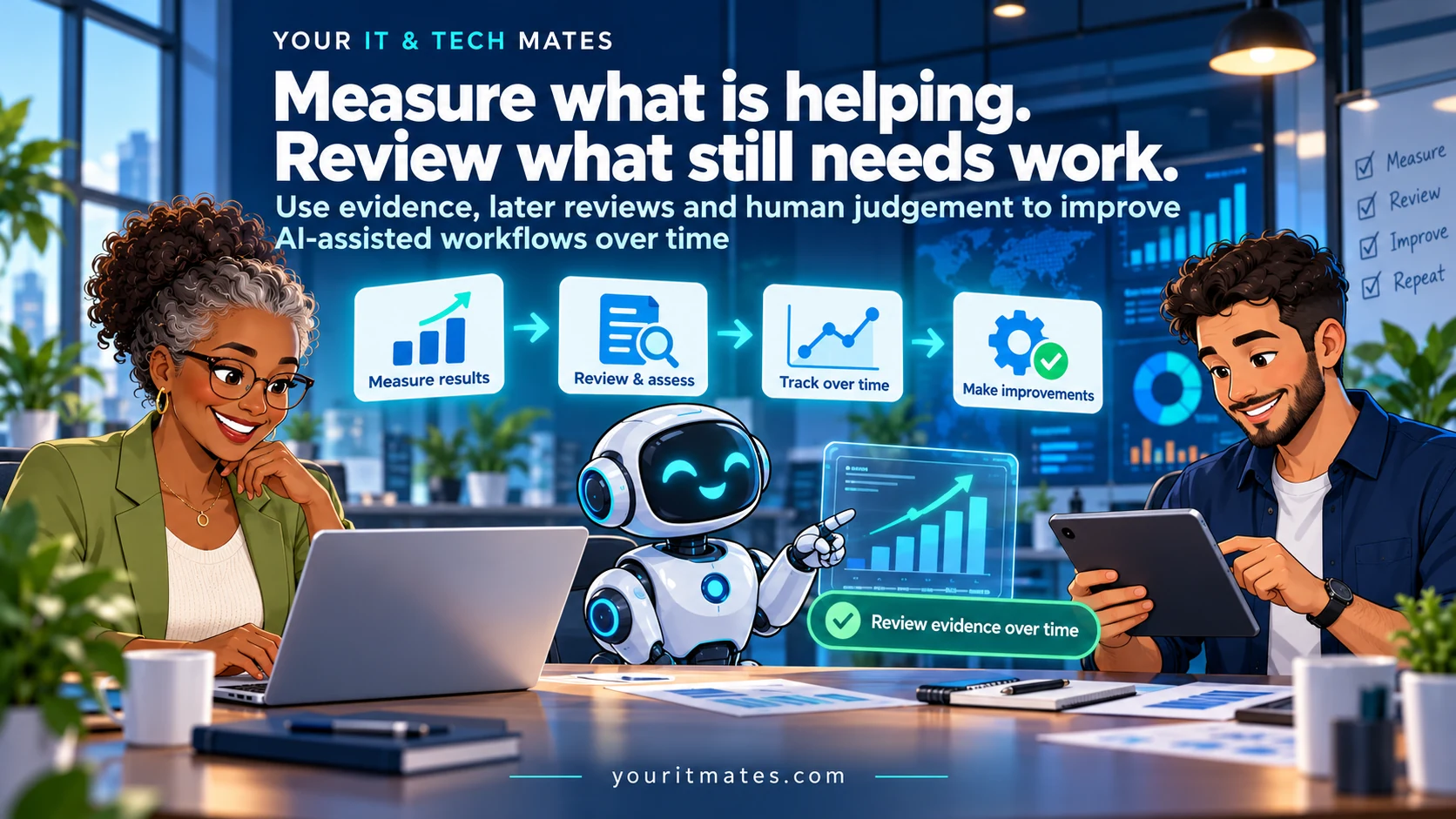
Record the starting situation, the proposed improvement and who reviewed it. Keep engagement, enquiries, qualified requests and completed outcomes distinct. Revisit comparable dated evidence later and write down uncertainty, missing information and follow-up actions.
What we have built — and what we have not proved
Our source-level improvement cycle links proposed work, approved release evidence and later observations. It does not learn autonomously, make causal claims, train a model or publish updates by itself.
How this could help another small business
Small businesses can apply the same method to enquiry handling, FAQ quality or admin handovers: choose one useful measure, check data quality and let staff decide the next step.
When to ask for help
If your business has a similar challenge, begin with a practical workflow review. Visit small-business software and AI services or describe your need through QuoteMe. The existing Virtual Receptionist may assist with approved guidance where available; confirm the live entry route and knowledge before adding a dedicated link. Staff assess scope, privacy-sensitive issues and any formal quote or appointment.
Related reading
Common question: Do more website visits mean more completed jobs?
No. Engagement and commercial outcomes need separate evidence; one does not prove the other.
What counts as evidence
More visits or a larger dashboard does not necessarily mean customers are receiving better help. Our source-level review tools distinguish article visibility, engagement, enquiry starts, reviewed qualified enquiries and confirmed outcomes. Missing or privacy-suppressed results remain unknown, rather than being reported as zero.
A responsible review cycle
Start with a clear baseline and the exact workflow being changed. Document who approved a proposed improvement and when it was actually released. Later, compare like-for-like periods and inspect data quality. Record plausible alternative explanations, such as seasonality, service changes or different sources. Human reviewers decide what to do next.
Illustrative example: improving a help article
A business might rewrite a confusing answer after staff repeatedly hear the same question. The next review could examine whether the updated article is being discovered and whether the wording is clearer in supervised feedback. It should not claim the rewrite caused extra revenue merely because some enquiries happened afterwards.
Useful measures for a small business
Select a few practical indicators: missing information in incoming requests, handovers requiring clarification, time spent locating approved answers, content freshness and genuinely confirmed outcomes where appropriate. Protect personal information and establish ownership before attempting broader reporting.
The limit of automation
The controlled improvement cycle in our repository is a record of proposed work and later observations, not self-training AI. Successful offline tests do not establish production effectiveness. When evidence is thin or inconsistent, the honest decision may be to gather better data or make no change.
Need help with this problem?
Describe the business workflow in your own words. The existing team reviews scope and confirms quotes, appointments and commitments. Never share passwords or sensitive customer information in public enquiries.