The practical problem
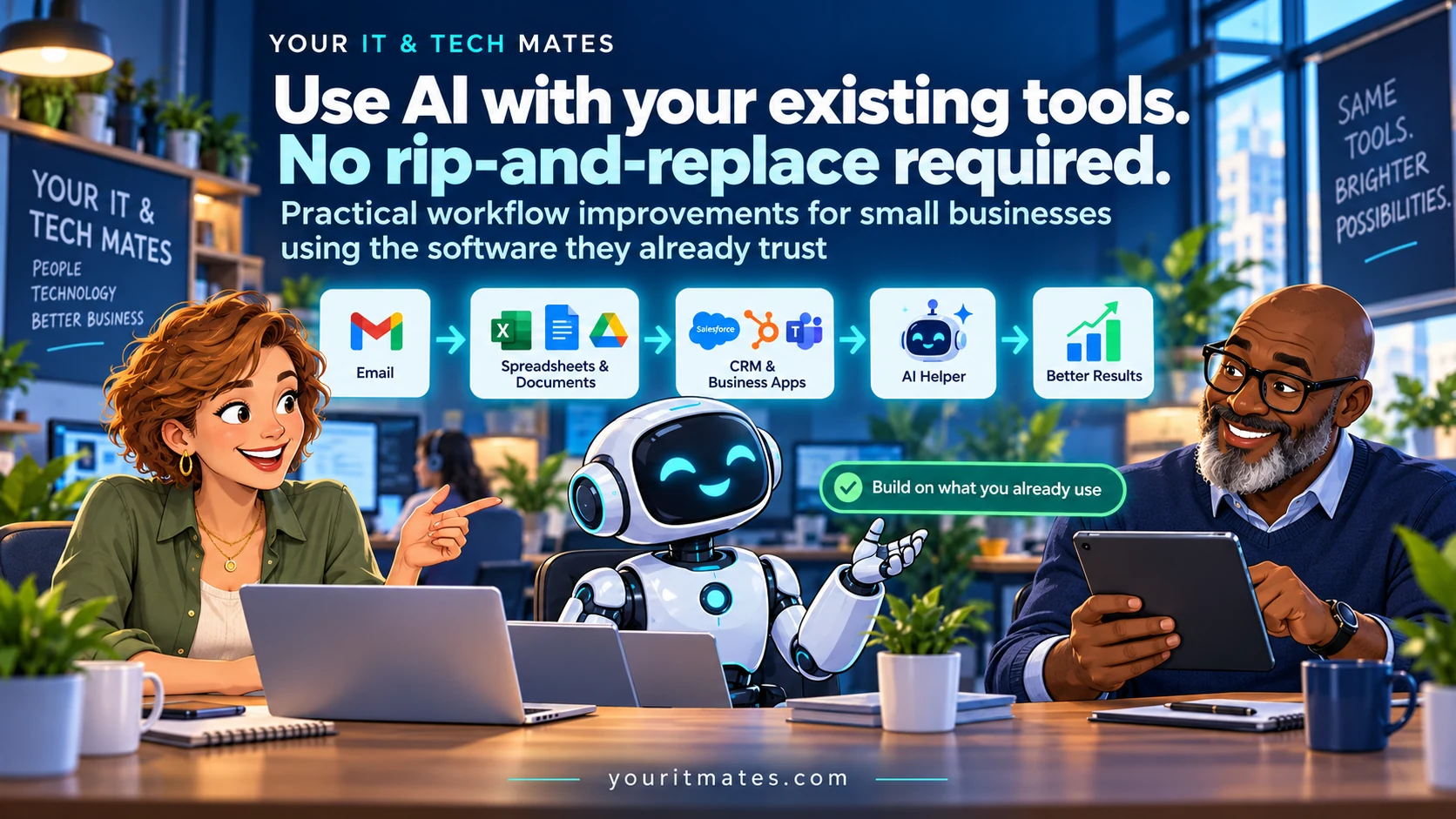
Buying another application is not always the best first step. Repeated copying, chasing and searching may be caused by a poor connection between software your team already uses.
A human-reviewed workflow
Map the task from enquiry to completed action. Identify which system owns each record, which steps are predictable and which need judgement. Test a small change with dummy information before considering AI drafting or summarisation. Agree who reviews every customer-facing commitment.
What we have built — and what we have not proved
For our own content work, the source-level design reuses the existing editorial board, knowledge and review owners rather than inventing another tracker. That design principle may transfer to other systems, but integrations depend on supported interfaces and access controls.
How this could help another small business
Start with one process and list the tools, handovers, permissions and failure cases. A human can then scope whether a simpler workflow or AI assistance is appropriate.
When to ask for help
If your business has a similar challenge, begin with a practical workflow review. Visit small-business software and AI services or describe your need through QuoteMe. The existing Virtual Receptionist may assist with approved guidance where available; confirm the live entry route and knowledge before adding a dedicated link. Staff assess scope, privacy-sensitive issues and any formal quote or appointment.
Related reading
Common question: Do we need to replace our CRM to use AI?
Not necessarily. First assess the tools you already use and their supported integration options.
Our biggest lesson: integration before automation
Adding a new AI system can multiply the places staff must check. Our own editorial engineering deliberately reused the existing dashboard, article catalogue and publication records rather than creating another task store or chatbot. That principle can be more valuable than the AI feature itself: the business needs a clear owner for each record and a sensible handover.
A step-by-step small-business assessment
First map one repeated task, such as handling an enquiry. Write down where the request arrives, where details are stored, what the next action is and who approves it. Separate predictable steps, which ordinary software can handle, from unstructured messages, which AI might help summarise. Check permissions, duplicate records, privacy and a manual fallback before testing a change.
Illustrative example: managing an inbox
Imagine a small maintenance business using email, a spreadsheet and an existing scheduling tool. The sensible first improvement might be a consistent request form and one shared status field. AI could prepare a summary for staff to review, but it must not silently commit to a job, price or appointment. There is no reason to replace the whole software stack before validating the process.
Questions to ask before spending money
Which system is the source of truth? Can the existing tools export or connect data safely? What happens when an integration fails? Who can correct an AI summary? How much staff review time is reasonable? These questions help a business choose a small, measurable experiment instead of buying features it may never use.
Where professional help fits
Your IT & Tech Mates can discuss practical software and AI workflow requirements within its verified service scope. A review should explain trade-offs and possible next steps, not guarantee savings or promise that every application will integrate.
Need help with this problem?
Describe the business workflow in your own words. The existing team reviews scope and confirms quotes, appointments and commitments. Never share passwords or sensitive customer information in public enquiries.