The practical problem
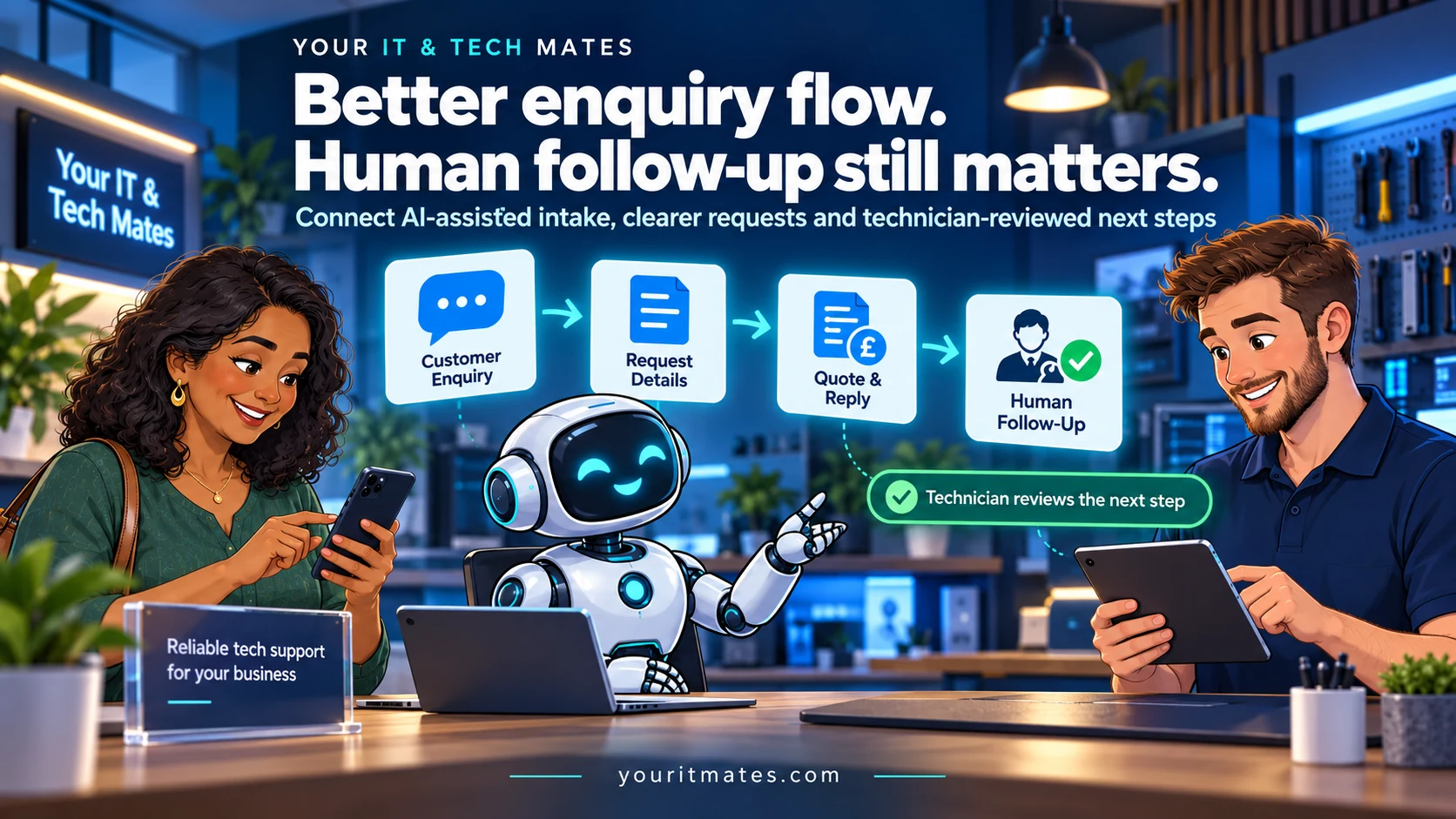
People asking for help should not need to understand your internal systems. The task is to collect enough relevant information for staff to respond clearly without promising an unreviewed price or booking.
A human-reviewed workflow
Give customers a straightforward question-and-answer route, clarify the issue in their own words, collect only necessary data, and hand the request to the authorised team. A change of topic should be reassessed from the customer's actual message, not guessed from the page they came from.
What we have built — and what we have not proved
Your IT & Tech Mates uses existing QuoteMe and Virtual Receptionist pathways. These interfaces retain human control of quotations, availability and commitments; this article does not claim any automated booking or proven conversion improvement.
How this could help another small business
An enquiry workflow review can expose handover gaps, unclear forms or slow manual processes. The eventual changes depend on your existing services and staff capacity.
When to ask for help
If your business has a similar challenge, begin with a practical workflow review. Visit small-business software and AI services or describe your need through QuoteMe. The existing Virtual Receptionist may assist with approved guidance where available; confirm the live entry route and knowledge before adding a dedicated link. Staff assess scope, privacy-sensitive issues and any formal quote or appointment.
Related reading
Common question: Can an AI assistant confirm my repair quote?
It can help gather information, but final prices and commitments need authorised human confirmation.
Why faster intake is not the same as a better quote
Customers benefit when they can explain a problem clearly and know what happens next. Yet a polished AI interface can mislead if it suggests that a price, diagnosis or appointment is confirmed. Our existing QuoteMe pathway distinguishes collecting and reviewing information from the technician's final decision.
A practical handover design
Begin with the customer's own description, ask only necessary follow-up questions, provide a review step and identify who will respond. Article context can identify where a person started, but the Intent Engine must respect what the customer actually asks. If someone opens an AI article and instead requests laptop repair, the live message must take priority over the article topic.
Illustrative example: a service enquiry
Imagine a business owner describing missed calls and delayed quote replies. A safe workflow can gather the current enquiry channels, typical follow-up steps and business priorities. Staff can discuss a suitable system review. AI may help organise notes, but must not invent a fixed implementation price or guarantee a conversion result.
How to evaluate a small improvement
Track whether requests include the information staff need, whether enquiries receive a response and whether customers are confused about the next step. Keep enquiry starts, qualified requests and confirmed completed work separate. Review actual examples with privacy safeguards before changing routing or automating a customer response.
When a person must take over
Escalate uncertain, privacy-sensitive, complex or unsupported requests. Appointments, prices, final quotes and commercial commitments require authorised human confirmation; a conversational assistant should never impersonate that approval.
Need help with this problem?
Describe the business workflow in your own words. The existing team reviews scope and confirms quotes, appointments and commitments. Never share passwords or sensitive customer information in public enquiries.