
What this means for you
This helps readers understand how review-first matching, referral checks and proof approval keep the network safer for customers, students and providers.
Why automatic matching can be risky
A customer request may involve a private device, a scam concern, a family situation, a business system, a student pathway or a provider availability issue. A simple automatic match may miss important context.
Manual review helps check:
- whether the task is safe
- whether the helper is suitable
- whether the customer needs urgent help
- whether a student task is too advanced
- whether a provider is actually available
- whether any scam or privacy risk exists
Matching suggestions are not final assignments
A suggestion can help an operator see possible next steps. It should not automatically assign a job without review.
That is important for customer trust and for provider fairness.
Why referral rewards need review
Referral systems can be abused if they are fully automatic. A manual reward queue helps check whether a referral is real, eligible and connected to an actual outcome.
Manual review can help prevent:
- self-referrals
- duplicate referrals
- spam referrals
- unclear attribution
- rewards before the job is valid
- rewards where the customer did not consent
Why proof also needs approval
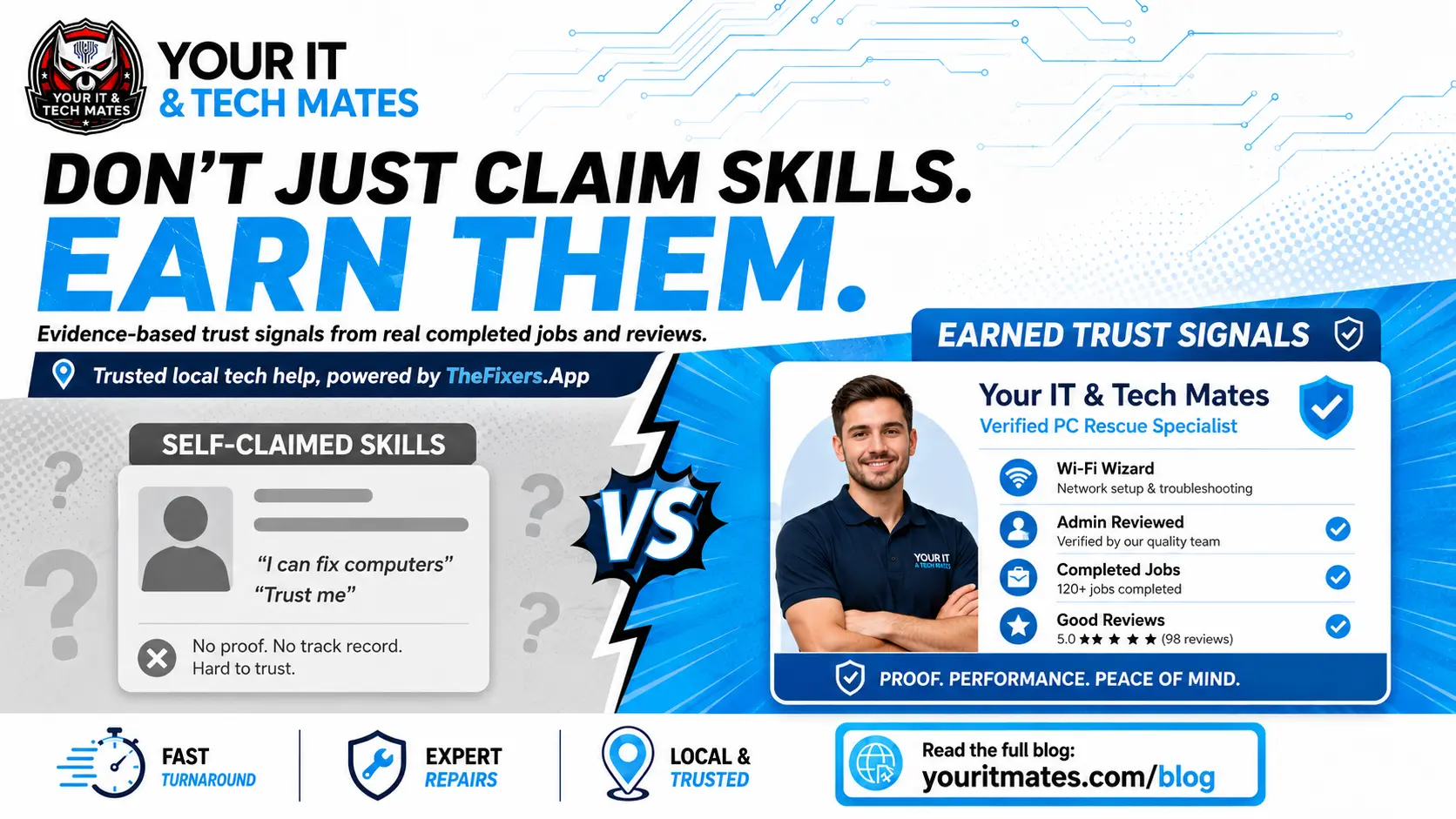
Proof cards, reviews, student Live Resume content and profile highlights should be checked before public sharing. This protects customer privacy and avoids exaggerated claims.
What customers should know
Manual review is not there to slow things down for no reason. It is there to keep the system safer and more accurate.
A real person can see context that an automatic rule might miss.
Final customer check: does this page help the reader?
A good network article should not make the reader decode product language. It should quickly answer: what is this, why does it matter, and what should I do next? For this topic, the practical benefits are:
- You can understand why some actions are reviewed before they are approved or made public.
- You can see why the network does not rely on blind automatic matching.
- Referral rewards, proof and matching decisions stay safer when a person checks the context.
- The process protects customers, students, providers and partners from rushed or unclear outcomes.
The page should feel useful even if the reader does not click a button straight away. They should leave with a clearer understanding of the pathway, the safety limits, and the next action that suits their situation.
What the review process is trying to prevent
Manual review is not there to slow people down for no reason. It helps avoid unsafe matching, unapproved public proof, unclear rewards, private information leaks and rushed decisions around customers, students, providers or partners.
The best explanation is simple: when a decision affects trust, privacy, safety, payment eligibility or public reputation, it should be checked before it is treated as final.
How this helps people trust the process
Manual review can sound slow until the reader understands what it protects. In a network that includes customers, students, providers, partners, proof cards, referrals and possible rewards, some decisions should not be automatic. A person needs to check whether the request is suitable, whether proof should be public, whether a student pathway is safe, and whether a referral reward is legitimate.
The article should explain this in customer language. It should not feel like a technical policy page. It should show the practical reason: review helps stop unsafe matching, accidental exposure, unclear responsibility and reward confusion.
What the reader should take away
The reader should understand that review is part of trust. It does not mean every step is complicated. It means sensitive actions are checked before they affect people. That is especially important when the outcome touches privacy, reputation, family support, student proof, provider opportunity or referral value.
The best platform article makes the system feel safer, not heavier. It gives people confidence that the network has boundaries and that public proof or rewards are not treated casually.
User feedback pass: make the page easier to act on
The final customer check for this page is simple: a reader should not have to understand the whole platform before they can decide what to do. The article should give enough context, then point to the right next step without pressure. That means the copy needs to answer the practical questions people usually have: Is this for me? Is it safe? What will I need to provide? What happens after I click? Can I stop if it is not the right fit?
The answer should be visible in the page itself, not hidden in a form or dashboard. A customer may be worried about a scam, a student may be trying to build confidence, a provider may be deciding whether the network is worth joining, and a partner may be checking whether a QR referral is safe to promote. Each reader needs a slightly different reassurance, but the same principle applies: clear steps, plain words, and no surprise exposure of private information.
This is also why the article keeps the main call-to-action buttons separate. A reader who wants a price guide should not be forced into the same pathway as a reader checking an existing request. A student building a profile should not be sent to the same place as a provider applying for work. A partner should not be asked to manage customer support manually when a safer referral path exists. The article should help each person choose the correct door.
From a user perspective, the best outcome is confidence. The reader should feel that Your IT & Tech Mates has thought about the messy parts of real-world tech help: family access, student learning, provider suitability, public proof, referrals, privacy and review. They should see that the network is not just a collection of pages. It is a safer way to move from a problem or opportunity to the next practical step.
Final publishing note for customer clarity
Before this page goes live, read it once as the person it is meant to help. The language should feel direct, useful and calm. The reader should not feel blamed for not knowing the system, and they should not feel pushed into the wrong action. The page should make the next step obvious while still giving them space to decide.
That is the difference between thin content and useful content. Thin content repeats a feature name. Useful content explains the benefit, the safe limit, the real-life situation and the next step. This page is written to do that, so the article can support Google indexing, AI summaries and real customer confidence at the same time.
The clearest next step
Start with the network guide, then read the review-specific article that matches your concern: matching, proof, rewards or support queue. A good next step should feel low-pressure. The reader should understand what happens next, what details are needed, and when a real person reviews the request before anything sensitive is shared or approved.
Related reading and network pathways
- Network
- Why Matching and Rewards Are Manually Reviewed
- Real Person Review Before Tech Help
- How Review Proof Loop Works After Tech Help
- Provider Profiles Reviews Proof Local Trust
Safety and privacy
Private details, job notes, proof, profile information and referral details should only be shown where they are useful and safe. The public article explains the pathway, while sensitive customer, student, provider or partner information stays inside the proper reviewed process.
FAQ
Does manual review mean everything is slow?
Not necessarily. Manual review is mainly for decisions where trust, safety or eligibility matters.
Can matching suggestions still be useful?
Yes. Suggestions can help operators work faster, but they should be checked before final assignment.
Why not pay referral rewards automatically?
Automatic rewards can create mistakes or abuse. Manual eligibility review helps make sure the reward is fair and valid.
Does this protect customers?
Yes. It helps reduce the chance of unsuitable matches, exposed proof, unsafe student work or incorrect reward claims.
Should admin review pages be in Google?
No. Public articles can explain the process, but admin routes and private dashboards should stay out of sitemaps. ## Trust comes from careful review The network should be easy to use, but not careless. Manual review helps keep customers, students, providers and partners safer.