What this means for you
This helps you know what happens next, what is safe to share, and which button to use when you want a price guide, a help request, or a job update.
Why proof matters
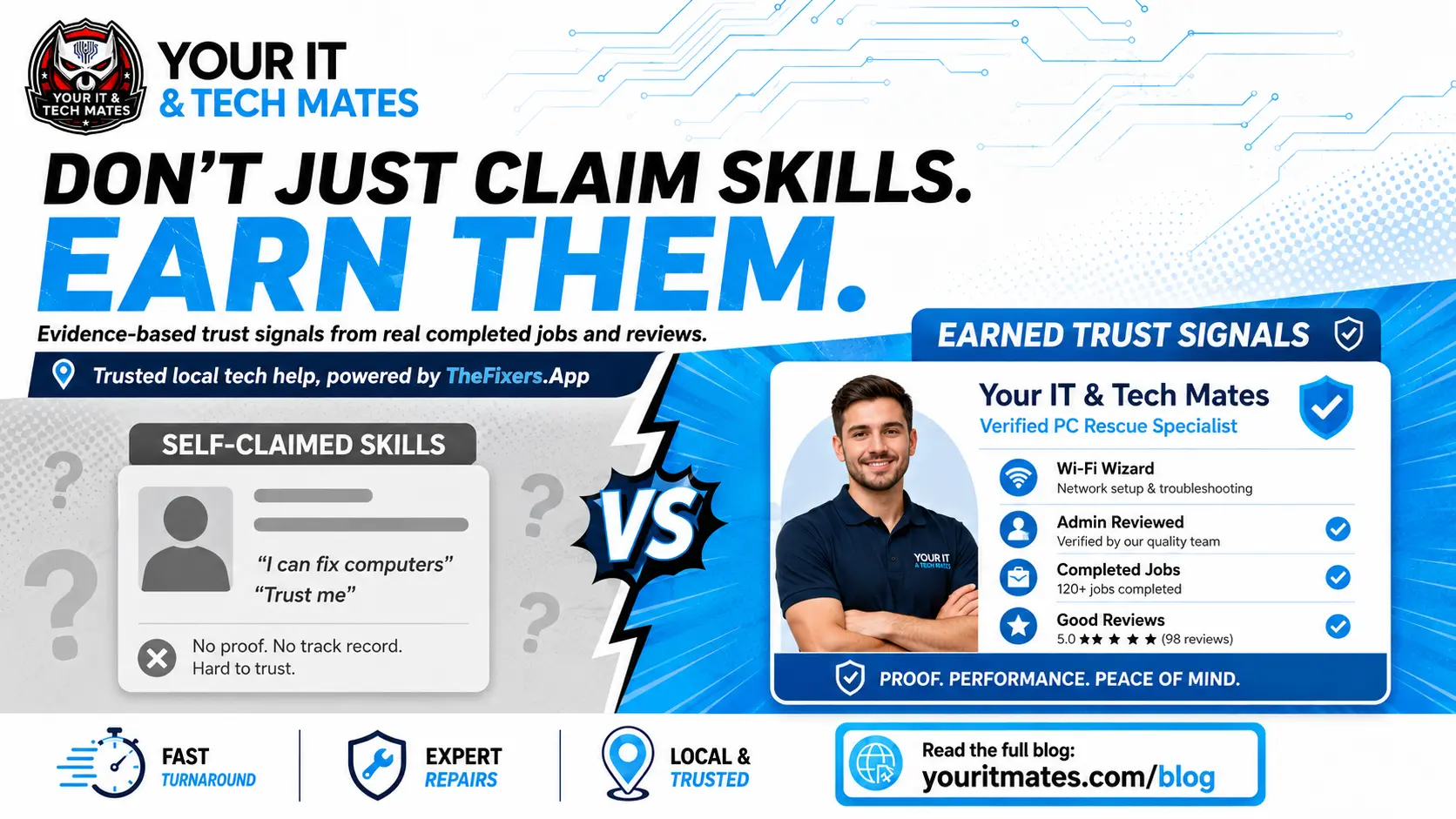
Customers want to know they are dealing with real people who have helped others. Students need real proof of safe, completed experience. Providers benefit from reviewed trust signals. Organisations want to know the pathway is responsible.
Proof can help all of that, but only if it is handled carefully.
What counts as proof
Proof might include:
- a customer thank-you note
- a short review
- a completed job category
- a private proof card for a student
- a provider review
- a general outcome such as device setup completed or Wi-Fi issue resolved
- a permission-approved story with personal details removed
Proof does not need to expose everything. In many cases, a safe summary is better than a detailed story.
Why customer permission comes first
A tech support job can include personal details. A review might mention a school, family member, business, suburb, device, account issue, or stressful scam situation.
That is why proof should default to private or pending until the customer gives permission and the team approves what is safe to publish.
How proof helps students
Students can build confidence and career evidence when safe tasks are completed and reviewed. A proof card can show that a student helped with communication, setup, admin, checklists, support preparation, or low-risk tech help.
This should support their Live Resume without overstating what they did. Honest proof is stronger than inflated claims.
How proof helps providers
Providers can use reviews and completed outcomes to build local trust. A customer may not need to know every internal detail, but a reviewed public profile can show the provider has experience and has helped with relevant issues.
How proof helps customers
Customers benefit because the network becomes easier to trust. Instead of faceless claims, they can see reviewed outcomes, real categories of help, and safe proof that people are being checked.
What should never be published without care
Avoid publishing:
- phone numbers
- email addresses
- addresses
- account screenshots
- passwords or codes
- private family details
- business-sensitive notes
- scam details that could embarrass or expose someone
- student/customer details without permission
How this fits the network
TheFixers.APP network is built around a simple loop: help request, reviewed support, completed outcome, proof, trust, referral, and future opportunity. The proof loop is the trust layer, but it only works if privacy and permission come first.
Practical next steps
After a job, you may be asked whether you want to leave a review or thank-you note. Keep it simple. Mention the type of help and the outcome, but avoid sharing private details. If proof is for a student or provider profile, it should still be reviewed before becoming public.
What you do not need to worry about
You do not need to understand every internal step before asking for help. The important thing is to choose the closest starting point: price guide, help request, job check, supporter, or support message. If something needs review, more detail or a safer pathway, the team can guide that next step.
You also do not need to share private details publicly. The network is designed so job tracking, proof, referral and review pathways can be explained in public while sensitive customer information stays protected.
Common customer situations this helps with
This pathway is useful when the issue is important but you are not sure which service to choose. For example, a family laptop may be slow, but the real question might be whether it needs a clean-up, backup, SSD upgrade, repair quote or replacement advice. A scam pop-up might look like a normal support issue, but the safer first step is to stop remote access, protect accounts and get calm guidance. A cracked device might need a price guide before anyone books the repair.
A good customer article should make those choices easier. It should not assume every reader is technical. It should explain the safe first step, the reason behind the check, and the benefit of using the right pathway instead of guessing. That is the customer value: fewer wrong forms, fewer repeated messages, less private information shared in the wrong place, and a clearer path to help.
What a good experience should feel like
From a customer point of view, the page should feel calm and practical. The reader should be able to say, “I know where to start, I know what not to share publicly, and I know what the team may ask for next.” The copy should also reassure people who are not ready to book. Sometimes the best first step is a price guide, sometimes it is a job check, and sometimes it is a support message because the problem involves safety, access, family consent or a scam concern.
That is why the call-to-action buttons are separated. They are not decorative. They help customers choose the correct door: price guide, help request, job status or network explanation. This reduces confusion and makes the article useful even before the reader contacts the team.
The clearest next step
Start with QuoteMe if you need a price guide, QuoteMe if you are ready to describe the issue, or job status if you already have a reference. A good next step should feel low-pressure. The reader should understand what happens next, what details are needed, and when a real person reviews the request before anything sensitive is shared or approved.
Related reading and network pathways
- Network
- Why Job Status Needs Contact Check
- Add Family Member Authorised Supporter Tech Help
- Repeat Booking Similar Tech Problem
- What Happens After Quoteme Price Guide
Safety and privacy
Private details, job notes, proof, profile information and referral details should only be shown where they are useful and safe. The public article explains the pathway, while sensitive customer, student, provider or partner information stays inside the proper reviewed process.
FAQ
Do I have to leave a review?
No. Reviews and thank-you notes should be optional.
Can my review be used on a student Live Resume?
Only if permission and review rules allow it. Student proof should stay private or pending until approved.
Will my personal details be shown publicly?
They should not be. Public proof should remove or avoid personal details unless explicit permission has been given and the content is safe.
Can a thank-you note stay private?
Yes. A note can be useful for internal feedback or private proof without becoming public.
Why does proof need review?
Review helps prevent private details, exaggerated claims, or sensitive job information from being published.
Can a provider use my review?
Only in a way that matches your permission and the site's review rules. Safe public reviews should focus on the help provided, not private details.