
Stop
Do not keep forcing restarts, charging attempts or DIY fixes if the computer has liquid damage, heat, scam pop-ups, strange noises or important files at risk.
Quick answer: If a virus warning or scam pop-up tells you to call a number, do not call it and do not give remote access. Disconnect from the internet if someone already connected, then change important passwords from a safe device and get the computer checked for remote tools, browser hijacks, malware and account risk.
Plain-English repair guide · Melbourne North · Last reviewed 27 September 2026
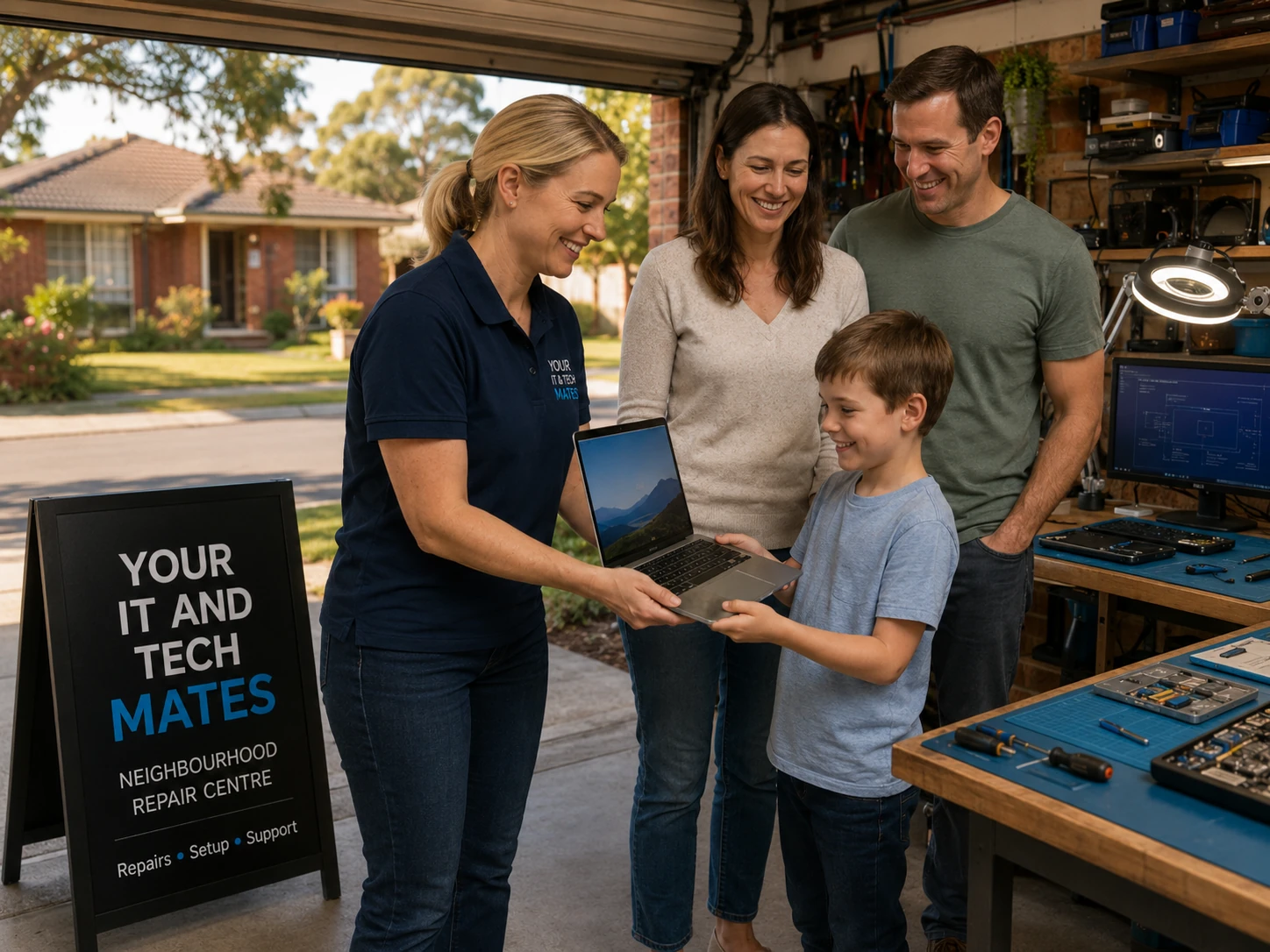
This guide is organised for quick decisions, safer checks and clearer next steps.
If a virus warning or scam pop-up tells you to call a number, do not call it and do not give remote access. Disconnect from the internet if someone already connected, then change important passwords from a safe device and get the computer checked for remote tools, browser hijacks, malware and account risk.
Best next step: Close the browser if possible, disconnect internet if anyone connected remotely, and use a different safe device for banking or password changes.
Do not do this: Do not call the number on the warning, install remote access software, enter banking details or keep using saved passwords on the affected computer.
Stop using the device or account if there is data risk, liquid, scam activity, burning smell, sparks or repeated failed startup.
Keep the model, symptom, photos, error messages and timing together before asking for help.
Use this guide first, then choose QuoteMe or the most relevant local service page.
Do not keep forcing restarts, charging attempts or DIY fixes if the computer has liquid damage, heat, scam pop-ups, strange noises or important files at risk.
Write down what changed, check the charger or connection only if it is safe, and take photos of any message, damage or symptom.
Send the computer model, what happened, photos and your suburb through QuoteMe so we can suggest the safest next step.
Close the browser if possible, disconnect internet if anyone connected remotely, and use a different safe device for banking or password changes. If the quote, data risk or downtime looks high, compare repair, upgrade and replacement before approving work.
Use these links if you are trying to work out whether the issue is a quick check, a repair job, a data-safety problem or a repair-or-replace decision.
This guide is for seniors, families and anyone worried about a fake warning who want a calm, practical answer before spending money or risking data loss. It is written for customer viewing, so it avoids jargon and focuses on what you can safely check, what to avoid, and when a proper repair or setup path makes sense.
If a virus warning or scam pop-up tells you to call a number, do not call it and do not give remote access. Disconnect from the internet if someone already connected, then change important passwords from a safe device and get the computer checked for remote tools, browser hijacks, malware and account risk.
The useful question is not only ‘can it be fixed?’ but also ‘what is the safest next step?’ A repair path should protect files first, narrow the fault, and then compare repair, upgrade, recovery or replacement in plain English.
The common causes for virus and scam pop-up removal include malicious ads, fake support pages, browser notification abuse, remote access scam software, unwanted extensions and weak or reused passwords. The exact cause depends on the device age, usage pattern, recent damage, software updates and whether the issue is repeatable.
For example, a slow computer used every day for work is a different case from a student laptop that was dropped in a school bag. A no-power desktop is different from a laptop that turns on but has a black screen. Clear symptoms help avoid guessing and avoid spending money on the wrong part.
Start with terms that are reversible and low risk. Confirm the power source, charger, cable, monitor, Wi-Fi, account login, storage warning, backup status and any recent changes. Restart once if it is safe, but do not keep forcing the device to start if there is heat, liquid, clicking sounds, repeated shutdowns or signs of drive failure.
If files matter, backup comes before reset. Check Desktop, Documents, Downloads, Photos, school folders, accounting files, email data, browser bookmarks and cloud folders. OneDrive, Google Drive and iCloud can be helpful, but they do not always include every local file or every user account.
These warnings are not there to scare you. They are there because many repair jobs become harder after repeated restarts, random cleaners, forced plugs, cheap chargers, rushed resets or well-meaning advice that ignores data safety.
| Situation | Usually repair or check first | Usually replace when |
|---|---|---|
| Pop-up only, no remote access | Close browser, clear suspicious items and check malware/browser settings. | Replacement is usually not needed. |
| Remote access was allowed | Check remote tools, accounts, passwords and possible data exposure. | Replacement is rarely first step; security cleanup comes first. |
| Money or banking involved | Contact bank from a safe phone/device and document what happened. | Replacement does not solve account risk. |
| Computer is still behaving strangely | Malware and browser hijack cleanup may be needed. | Replace only if the device is also old or unreliable. |
This table is a guide only. A quote-first check is still the safest way to avoid spending money on the wrong option.
Local help available around Epping, Wollert, Mernda, Lalor, South Morang and Melbourne North.
Use these related pages if you already know the device type or suburb. The broader guide helps you understand the issue; the service pages help you take the next practical step.
Use these links to move from general advice to the exact local repair path, data-safety step or related customer guide.
This page is designed for customers first: it explains the likely problem, the safe terms, the mistakes to avoid, and the right local repair path without assuming you know the technical part name.
For search and AI answer systems, each section uses plain wording, clear symptoms and direct links to the most relevant local repair pages so the answer can be understood without guesswork.
Start with safe terms: power, cable, charger, screen, recent changes, backup status and whether the problem is repeatable. Stop testing if there is heat, liquid, clicking sounds, burning smell or repeated shutdowns.
Most diagnosis and many repairs do not delete files, but backups should be checked before resets, reinstall work, storage replacement or data recovery attempts.
Replacement may be better when the device is old, unsupported, too slow for current needs, or has several faults at once. Repair can still make sense when there is one clear issue and the device remains useful.
Yes. A clear message with the suburb, device model, symptoms and backup status is often enough to suggest the safest next step.
Mention when the issue started, whether there was a spill or drop, any error message, what changed recently, whether files are backed up and whether the device is for school, work, business or home.
Stop using it if there are warning signs such as heat, swelling, liquid damage, burning smell, clicking drive sounds, repeated shutdowns or scam remote-access activity.
A clear message helps us suggest the safest next step without making the job bigger than it needs to be.
Tell us what is happening, your suburb, device type, model if known, whether files are backed up and how urgent the issue is. We can then suggest whether QuoteMe, repair, data recovery, setup, upgrade or replacement advice is the safest path.
If you are in Melbourne North and want help with the next step, use the most relevant local page: computer repairs Epping, computer repairs Wollert, computer repairs Mernda, computer repairs Lalor or computer repairs Melbourne North.